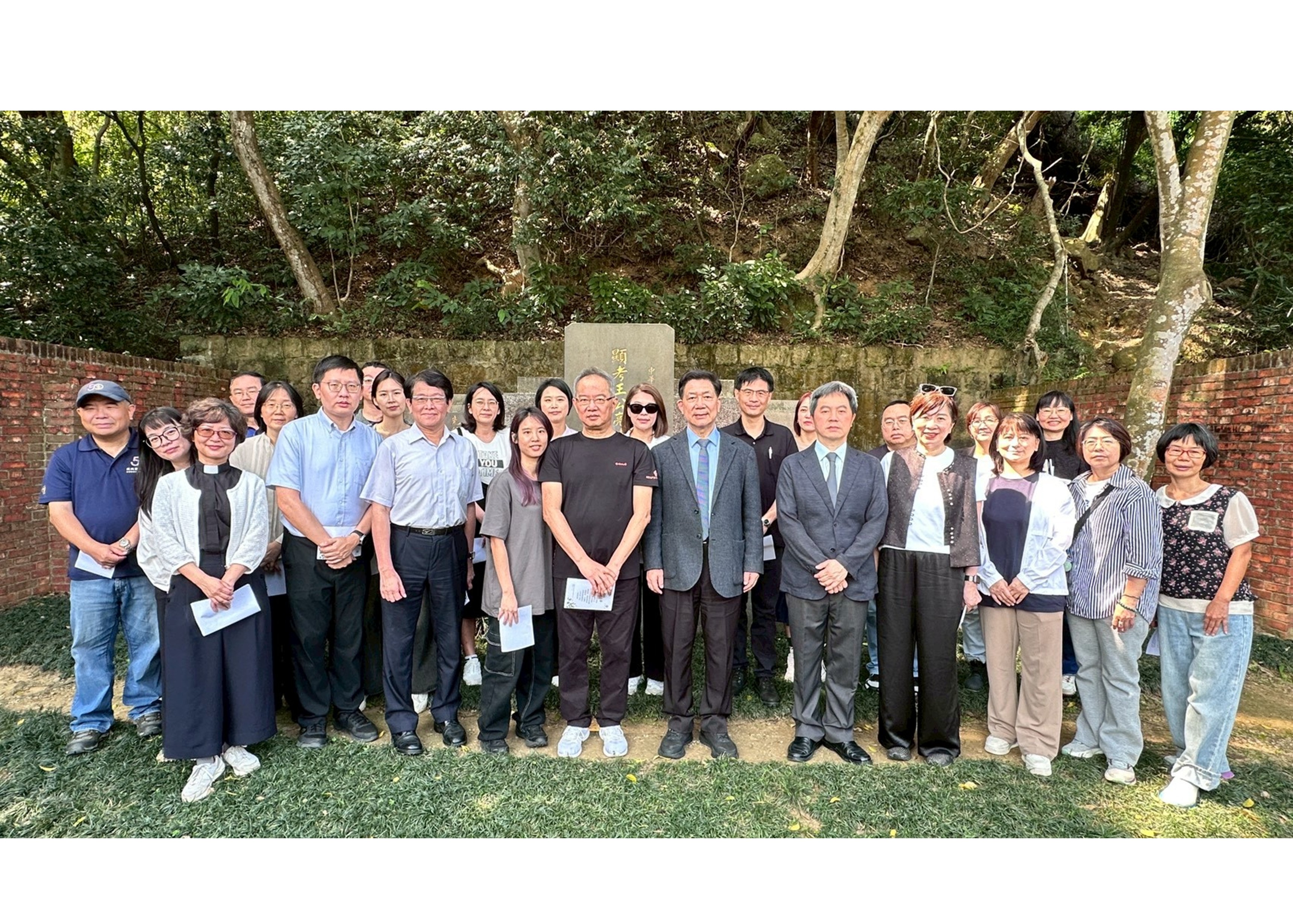
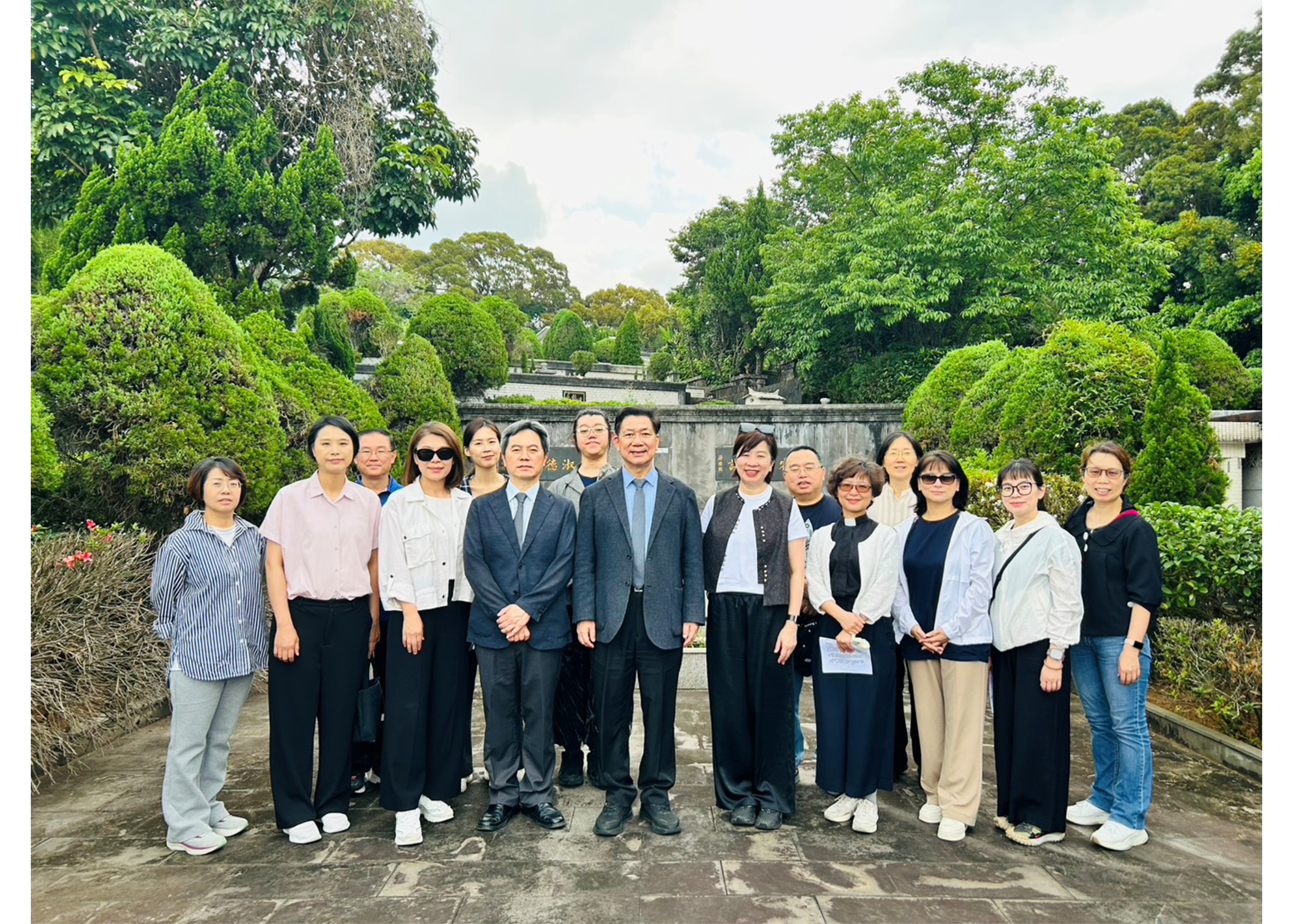
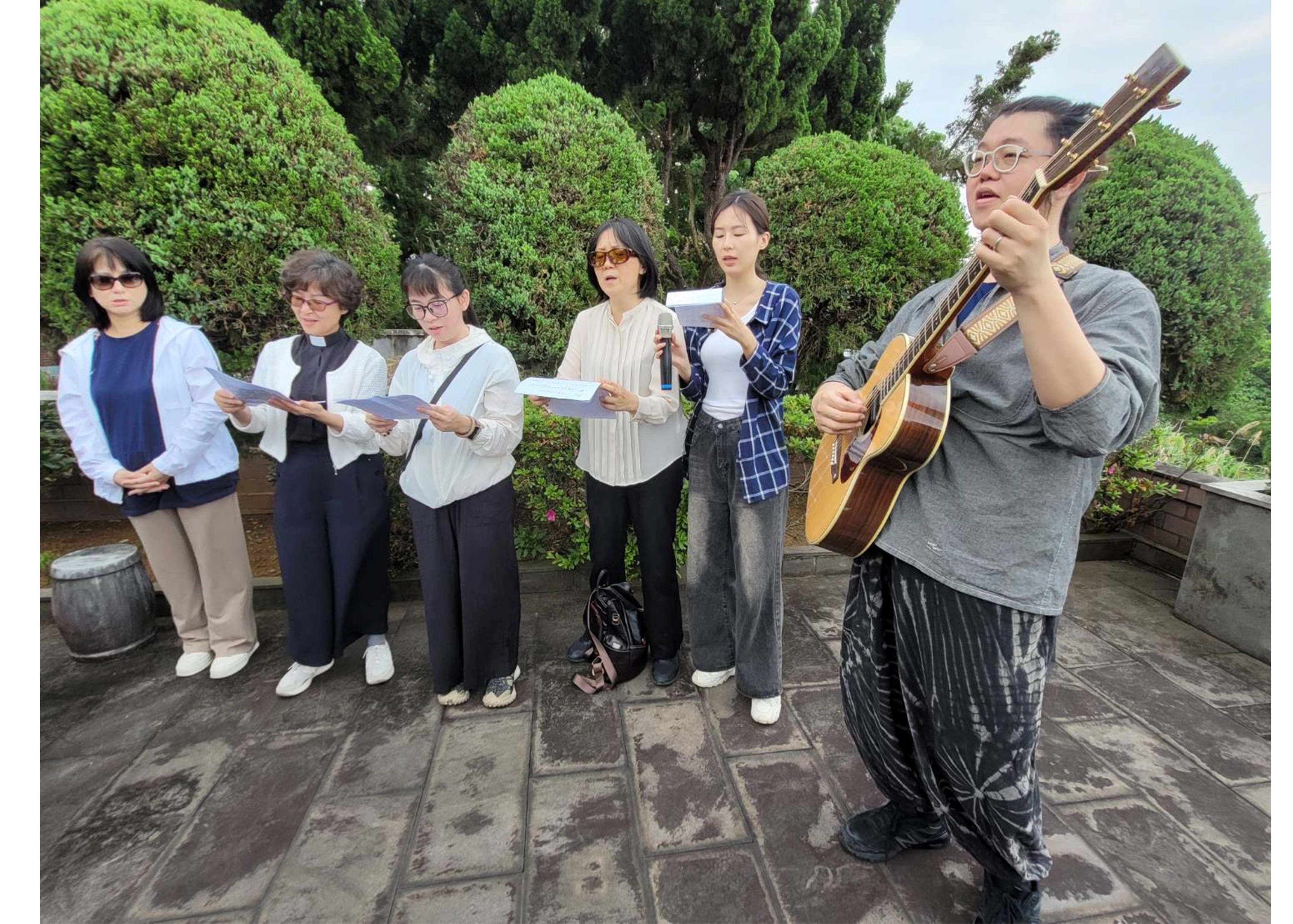
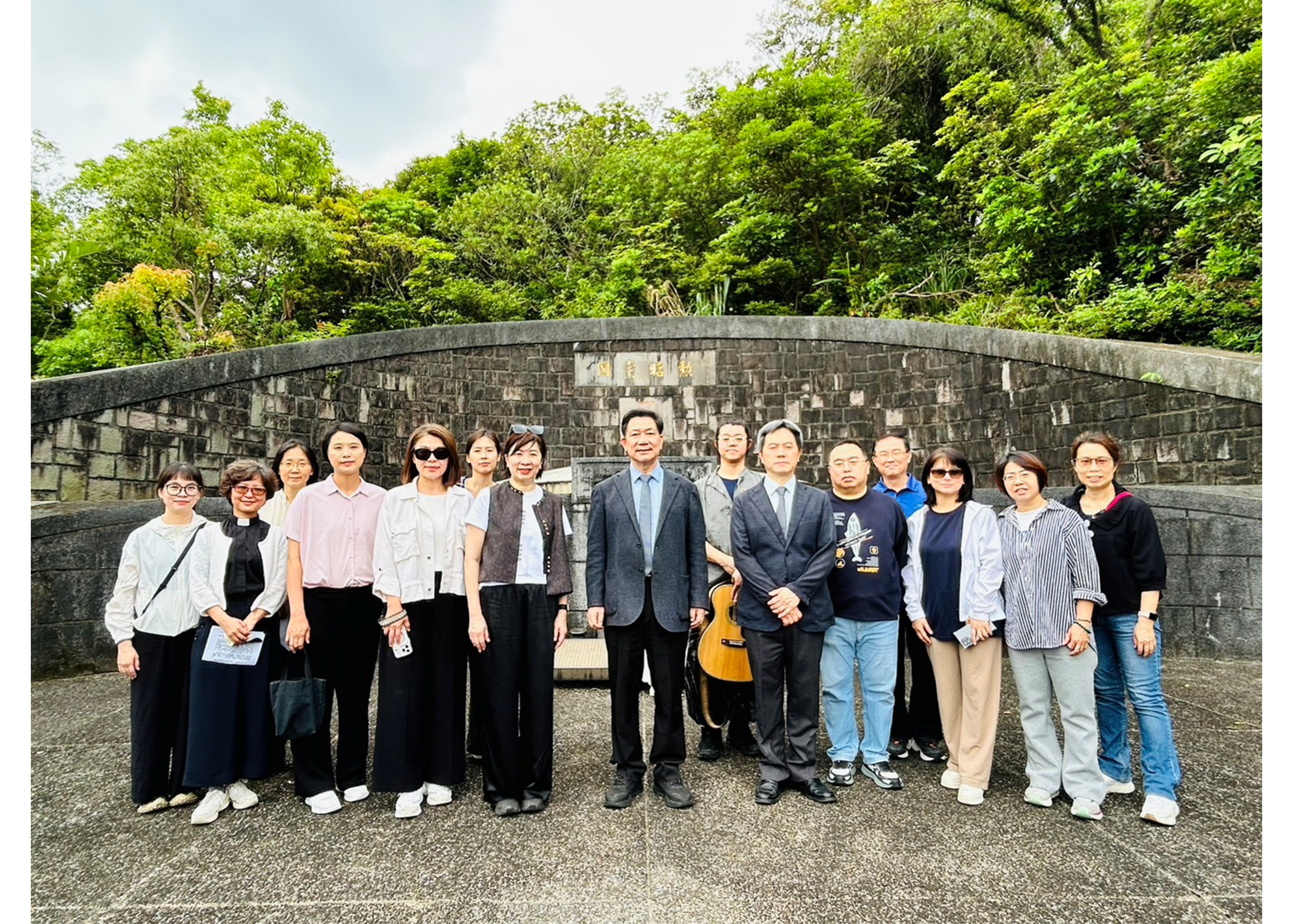
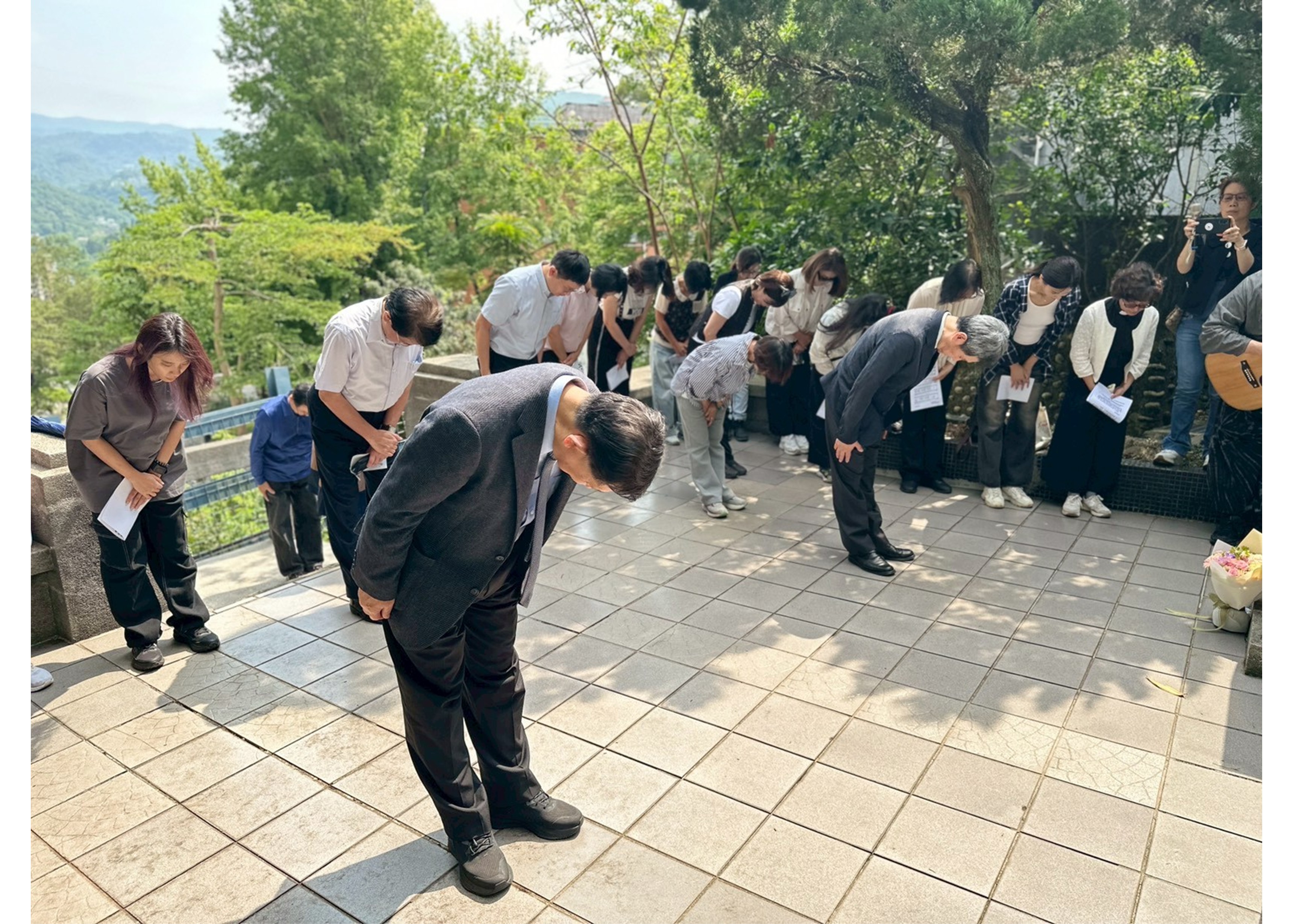
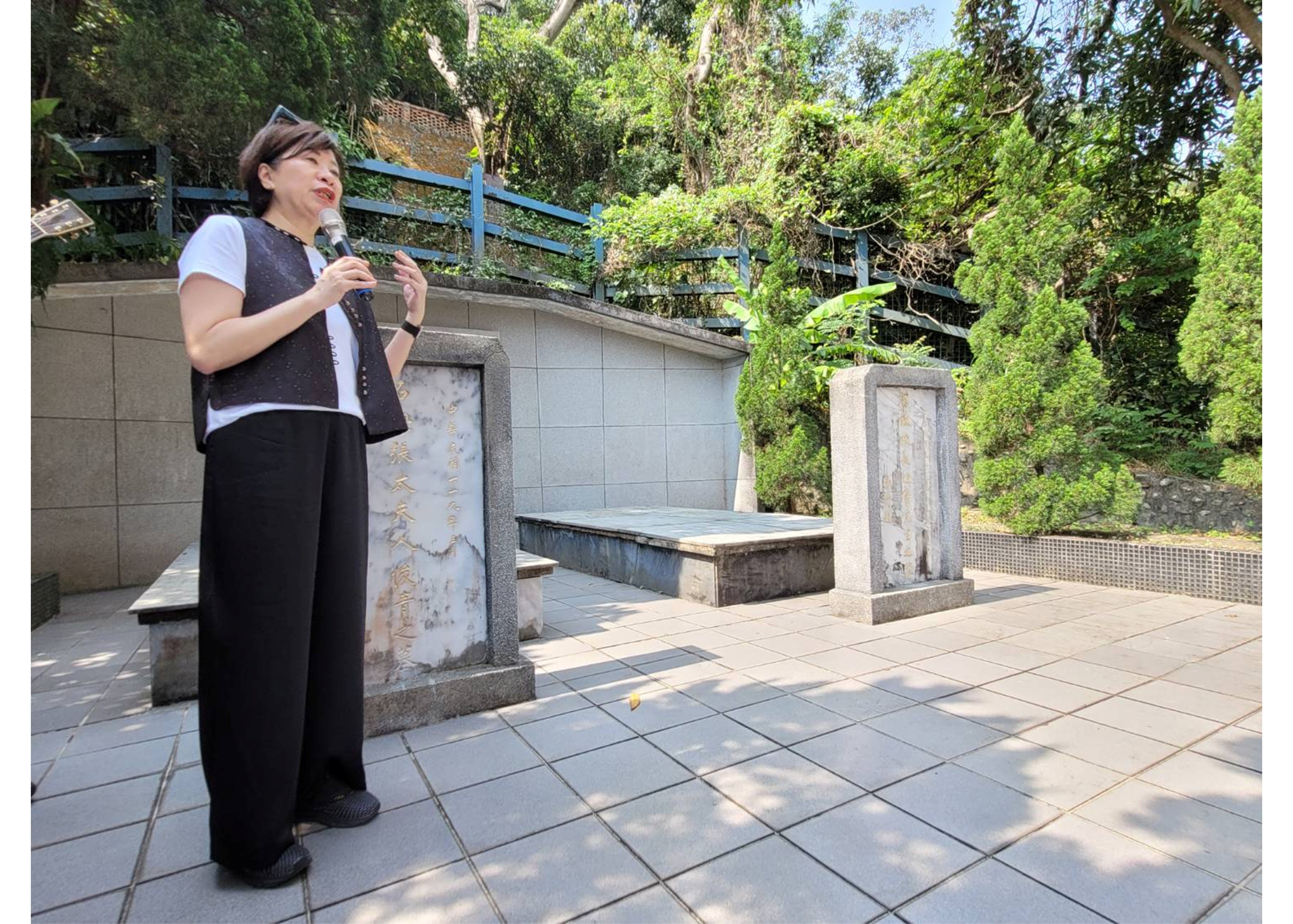
To remember the pioneers who contributed to Soochow University’s reestablishment and development in Taiwan, President Chyan-Long Jan led Vice President Shih-Ho Wang, senior administrators, and staff members on a memorial visit around the Qingming Festival, traditionally known as Tomb Sweeping Day, on April 23, 2026.
The delegation offered remembrance at memorial sites on the university’s back hill and in Yangmingshan. They honored former Board Chairmen Chung-Hui Wang and Ke Sun, former Presidents Chao-Yung Shih and Joseph K. Twanmoh, and Mrs. Twanmoh. Architect Shou-Cheng Wang, grandson of Wang Chung-Hui, and Ms. Ssu-Yu Wang, his great-granddaughter, also attended the ceremony.
President Jan noted that Soochow University was founded in Suzhou (Soochow) in 1900 and reestablished in Taiwan in 1954. He said the university’s steady growth over the past 126 years was built on the dedication and courage of earlier generations.
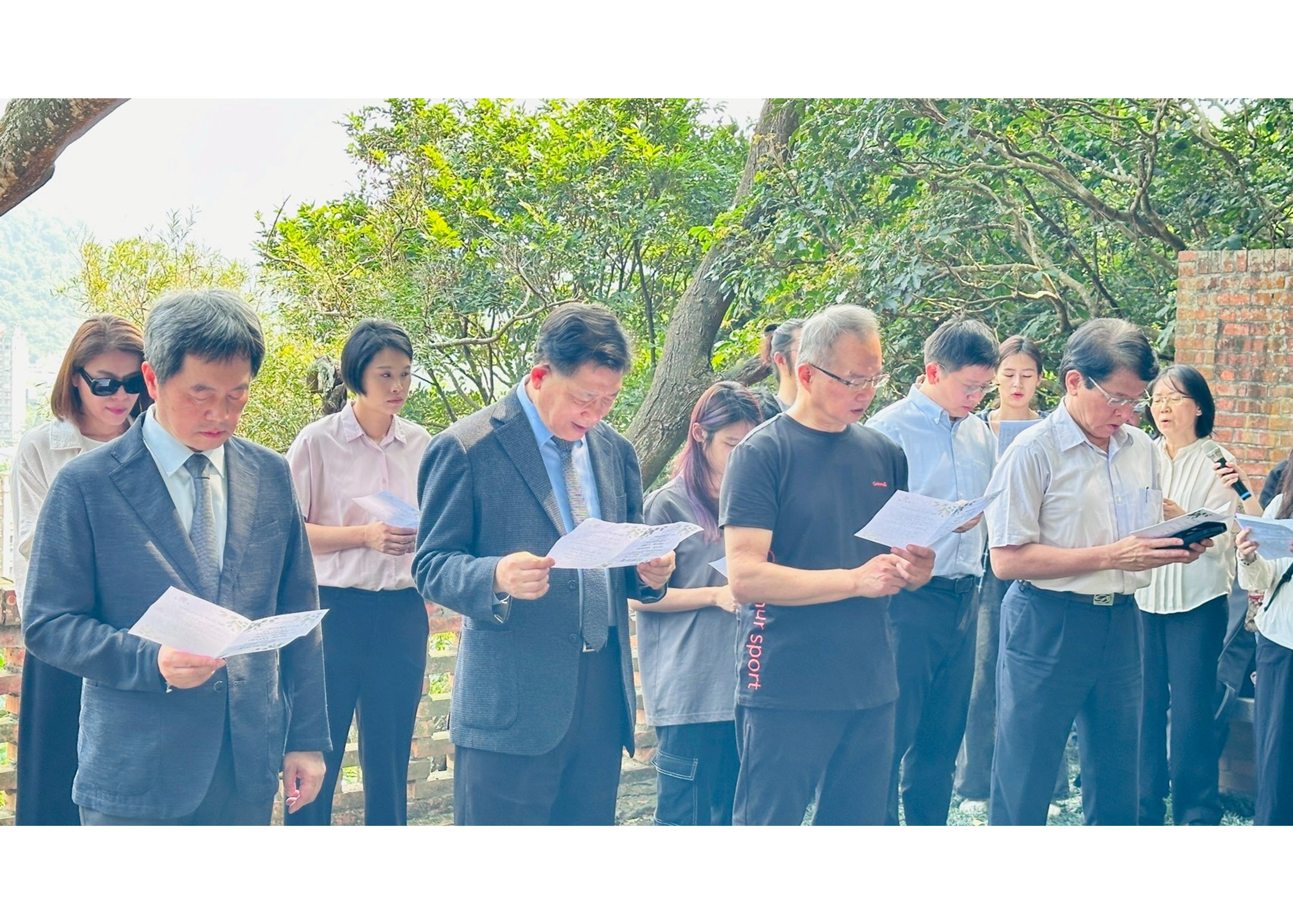
Jan added that Soochow holds a simple but solemn memorial ceremony each year during Qingming to express gratitude. The tradition, he said, also reminds the university community to pass on the spirit of its pioneers from one generation to the next.
During the ceremony, former Executive Director of the University History Research Advisory Committee Shu-Fang Wang shared the life stories of the four university pioneers and their connections with Soochow. Director Hsiu-Jung Hsu of the Chaplain’s Office also led colleagues in hymns and prayers.
Chung-Hui Wang, who served as board chairman from 1952 to 1958, was a renowned jurist, statesman, and diplomat. He attended the Cairo Conference in 1943 and played an important role in shaping Taiwan’s postwar international status.
Wang was also one of the most important figures behind Soochow’s reestablishment in Taiwan. When the university was operating only as a supplementary school and faced great uncertainty, he agreed to serve as chairman. In 1954, Soochow received approval to establish its School of Law, becoming Taiwan’s first private university. Wang Memorial Hall (phonetically “Chung-Hui” Hall) on the Waishuangxi Campus was named in his honor.
Chao-Yung Shih, who served as president from 1957 to 1968, devoted his life to education. He planned the development of the Waishuangxi Campus and expanded Soochow from three departments into a university with three schools and eight departments.
Shih also worked to strengthen academic discipline and improve student learning and campus life. To honor his contributions, the Science Building completed in 1973 was named Stone Memorial Hall (phonetically “Chao-Yung” Hall). Soochow also published a commemorative volume in 2025 to remember his leadership and character.
Ke Sun, whose courtesy name was Zhe-Sheng, became board chairman in 1967 while serving as president of the Examination Yuan. During his tenure to 1973, several campus buildings were completed, including Wen’s Place, Zhe-Sheng Hall, staff and faculty housing, the Psychology Department Building, Culture Hall, and Guei Memorial Building (Chung-Chi Hall).
To recognize Sun’s contribution to campus development, the Second Classroom Building was named Sun Memorial Hall (phonetically “Zhe-Sheng” Hall) after his courtesy name.
Joseph K. Twanmoh, courtesy name Chu-Chiu, served Soochow for 37 years in multiple roles, including alumni association president, trustee, vice chairman, chairman, president, and member of reestablishment committees. During the early years of Soochow’s reestablishment in Taiwan, he worked tirelessly to advance university affairs.
During his 14 years as president, Twanmoh accepted no salary. He established 26 departments, graduate institutes, and centers, acquired land for the Downtown Campus, and oversaw the construction of 14 buildings. He later donated substantial funds, books, and his private residence to the university.
The Second Building on the Downtown Campus was named Twanmoh Memorial Building (phonetically “Chu-Chiu” Building) in memory of him. To further recognize his lasting contributions, Soochow University approved a proposal at its April 2026 administrative meeting to rename the General Building as Twanmoh Building, pending further review by the University Affairs Meeting.
The university said the dedication of these pioneers laid a deep foundation for Soochow’s development. Facing an increasingly challenging higher education environment, Soochow faculty, staff, and students will continue to carry forward this legacy of commitment, courage, and educational service.
| category | title | date |
|---|---|---|
| Headline News | Soochow University International Students Explore Yilan: Culture & Fun | 10/21/2026 |
| Headline News | A Sweet Mid-Autumn at Soochow! 2026 International Students Enjoy Mooncakes Together | 10/01/2026 |
| Headline News | The World Meets at Soochow: Welcoming Fall 2026 Exchange Students | 09/29/2026 |
| Headline News | SU Welcomes International Degree Students with Comprehensive Orientation and Support | 09/09/2026 |
| Headline News | Soochow University Data Science Partners with San José State University as First Students Head to Silicon Valley | 09/03/2026 |