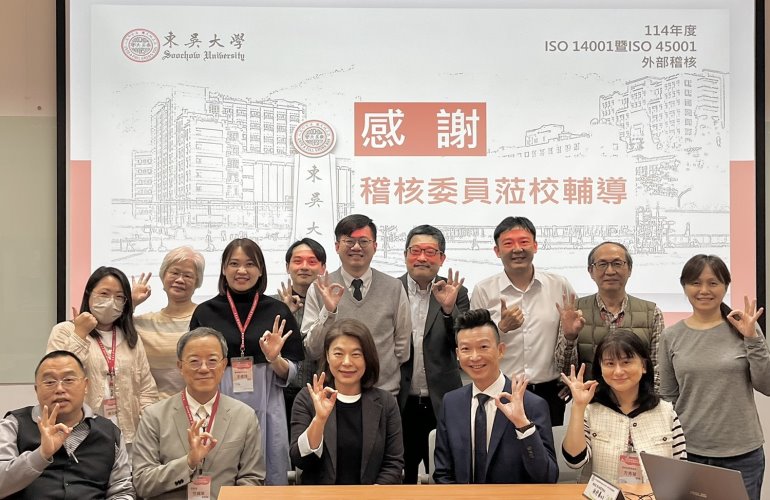

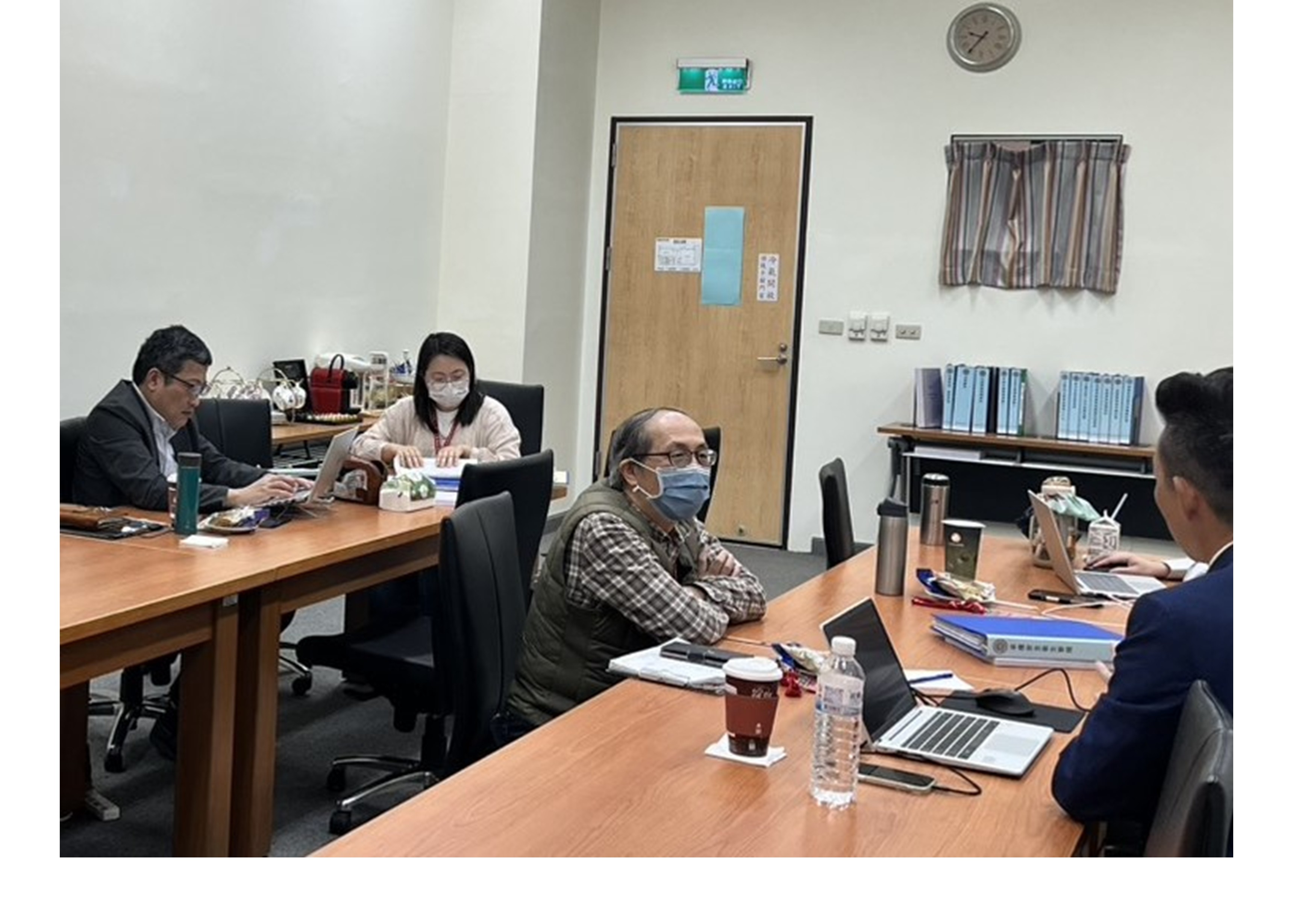
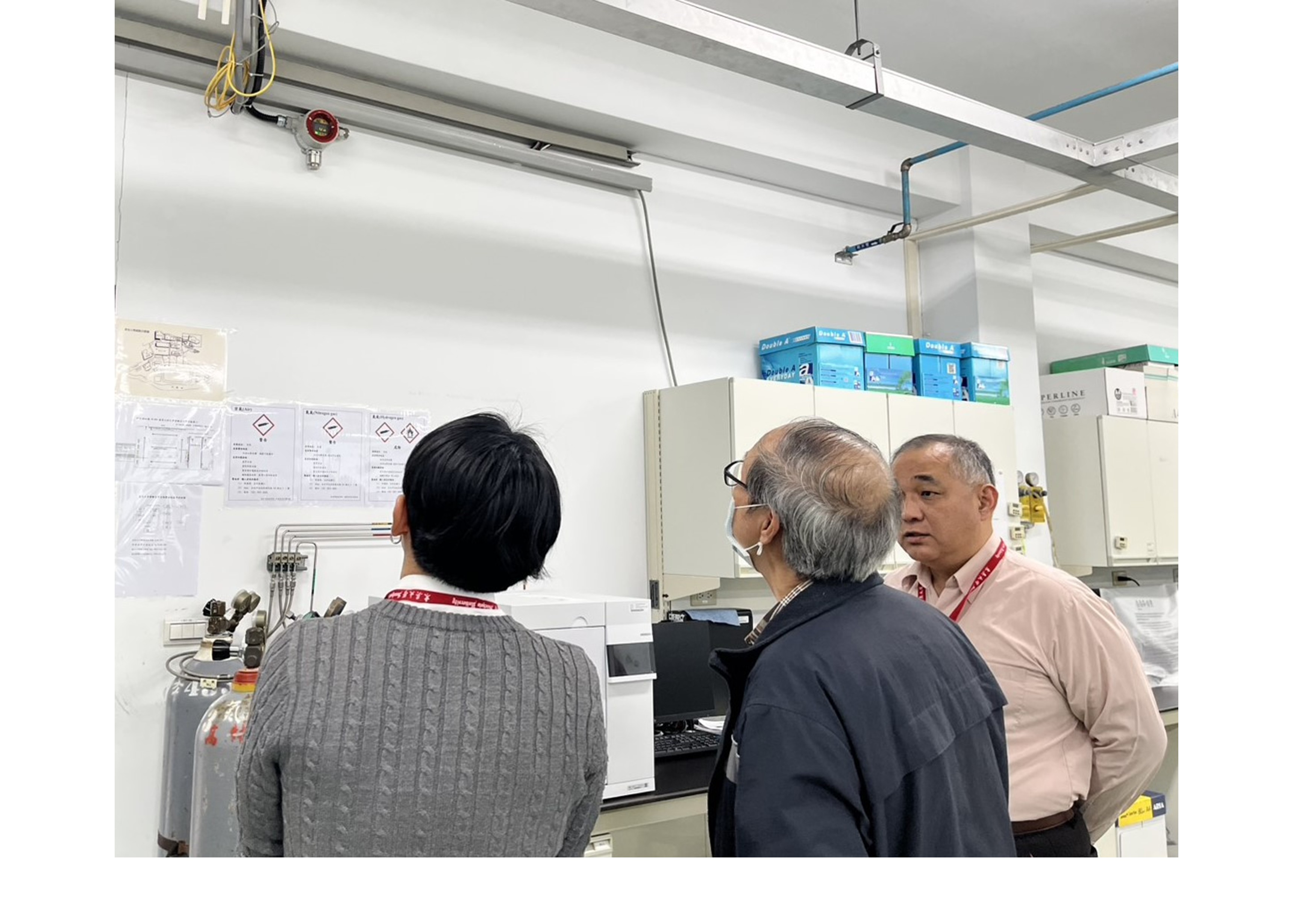
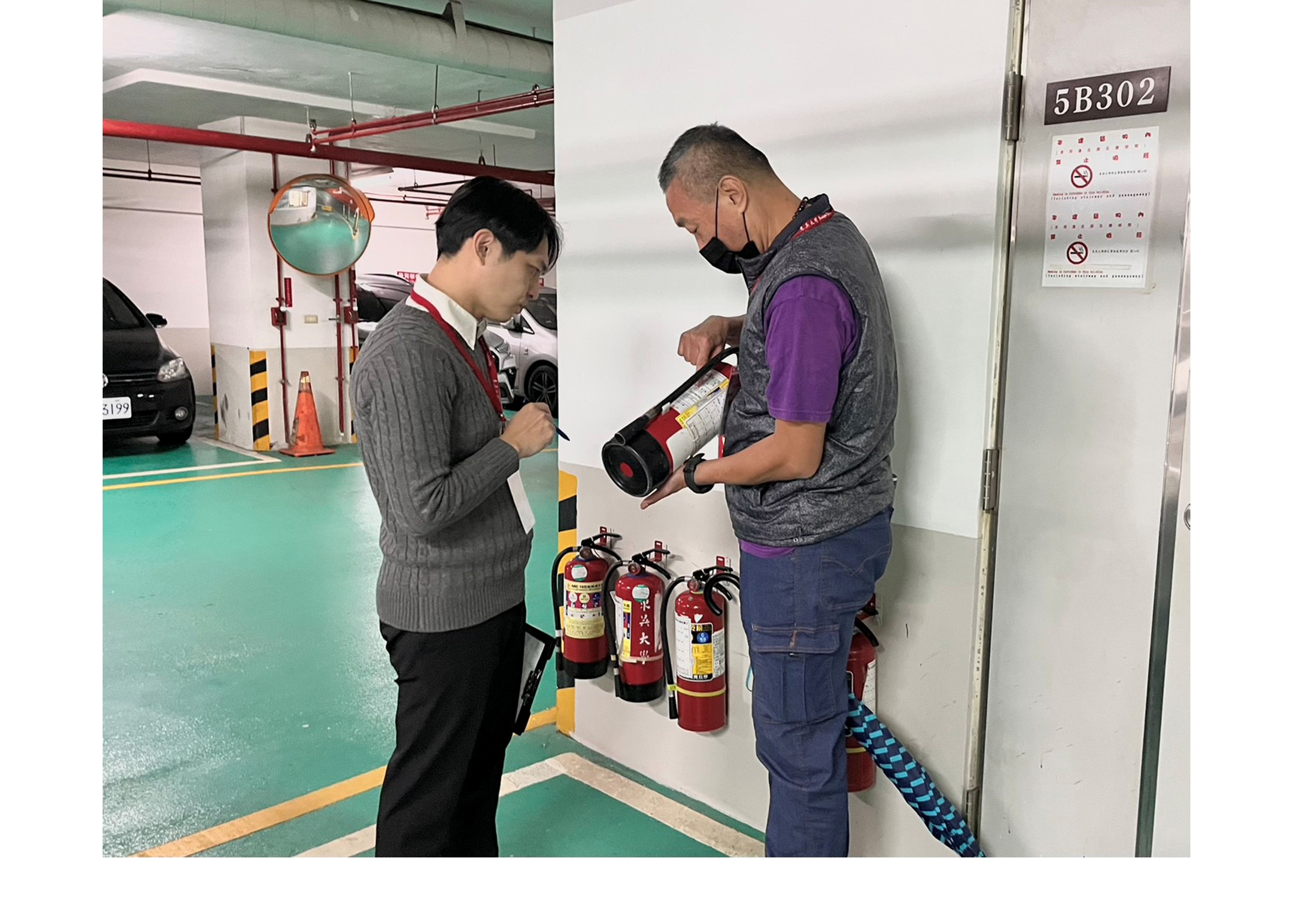
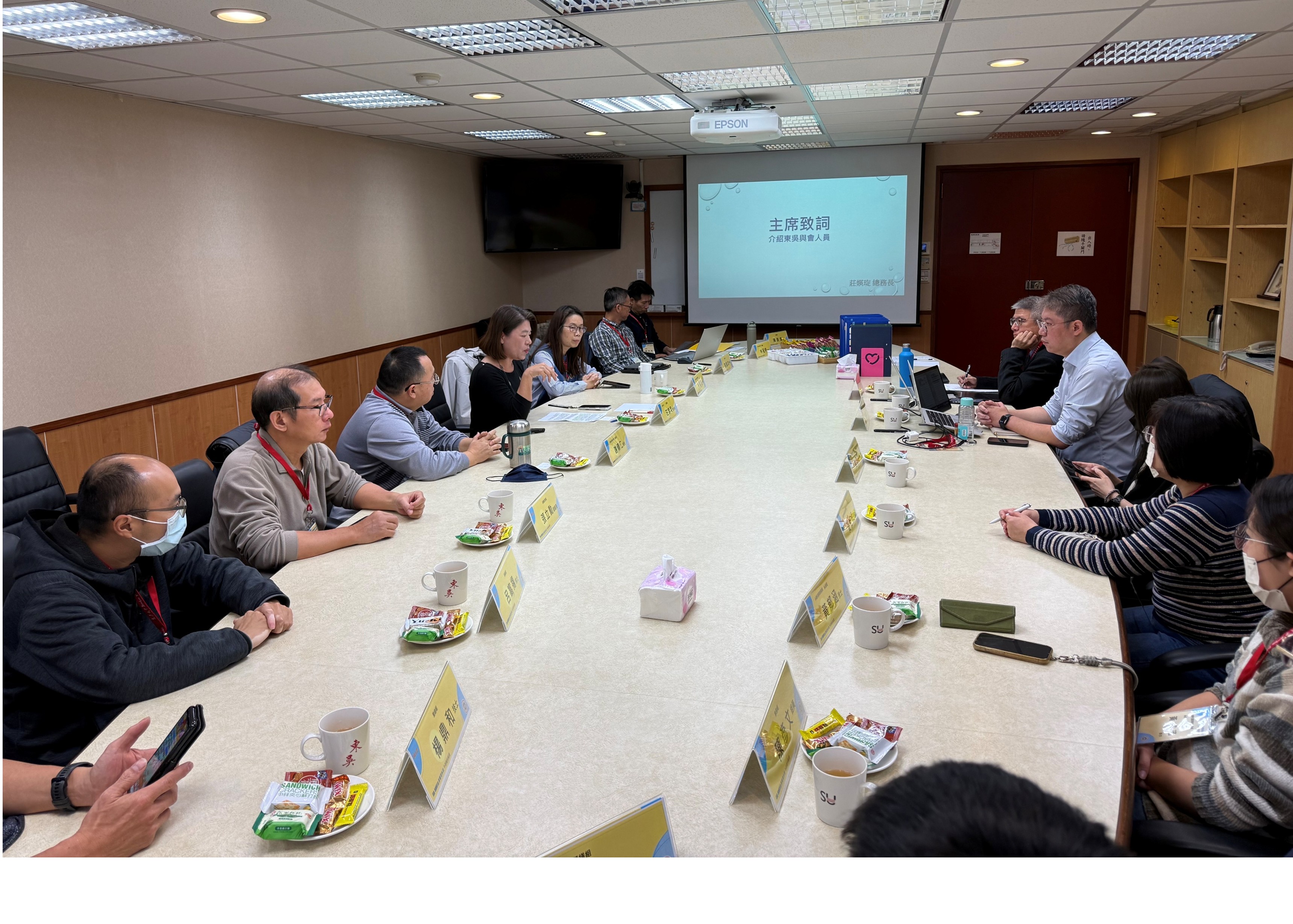
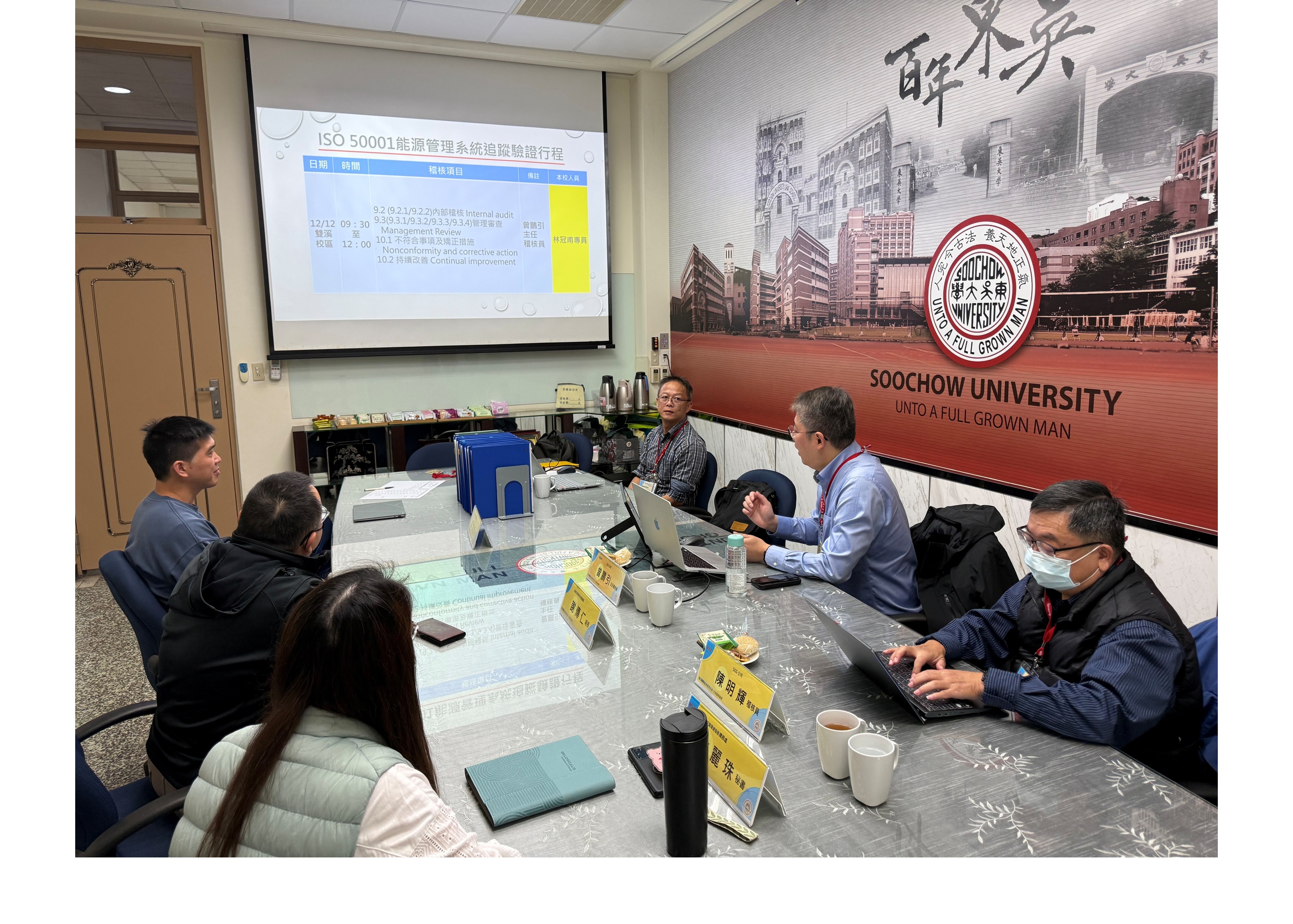
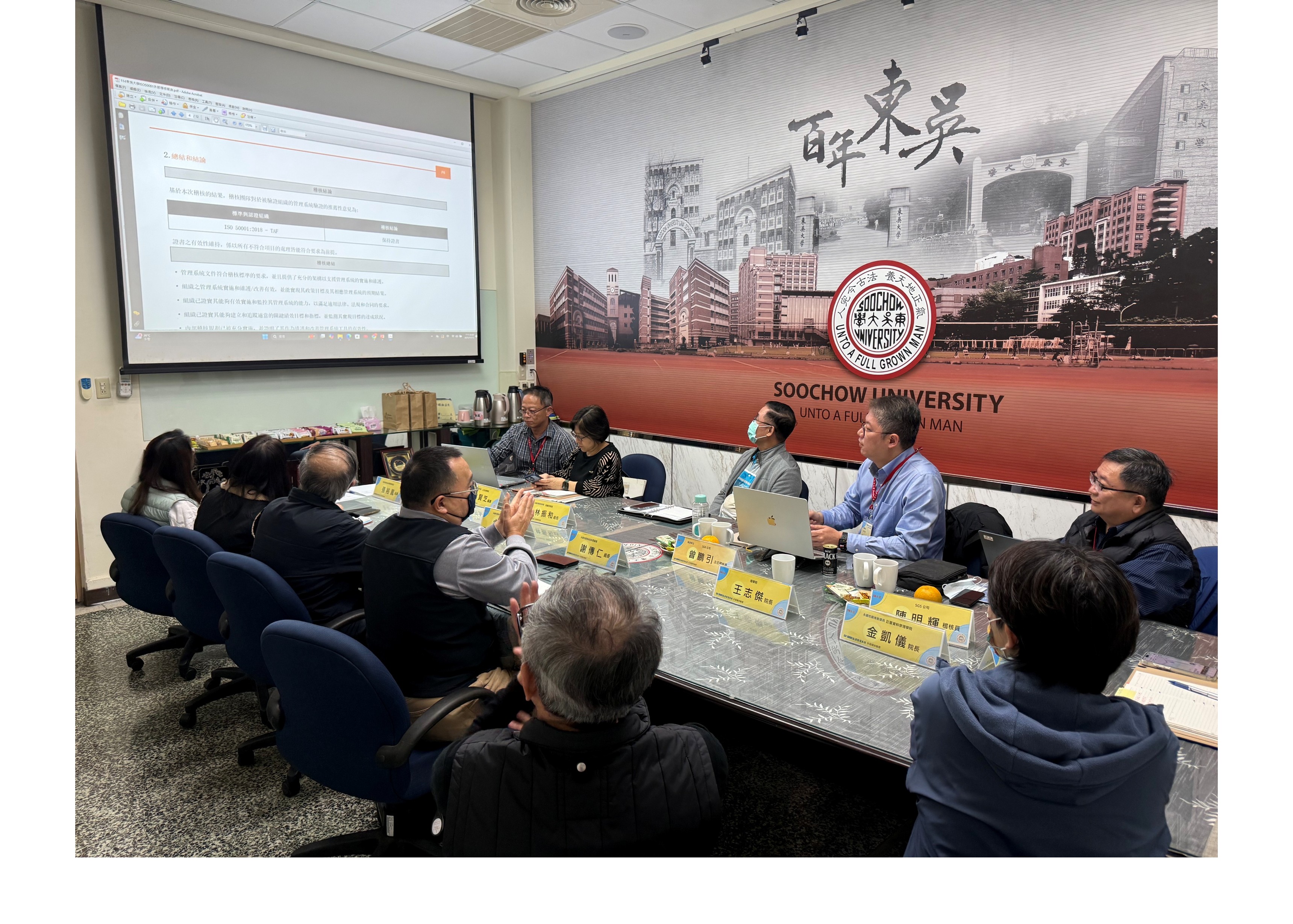
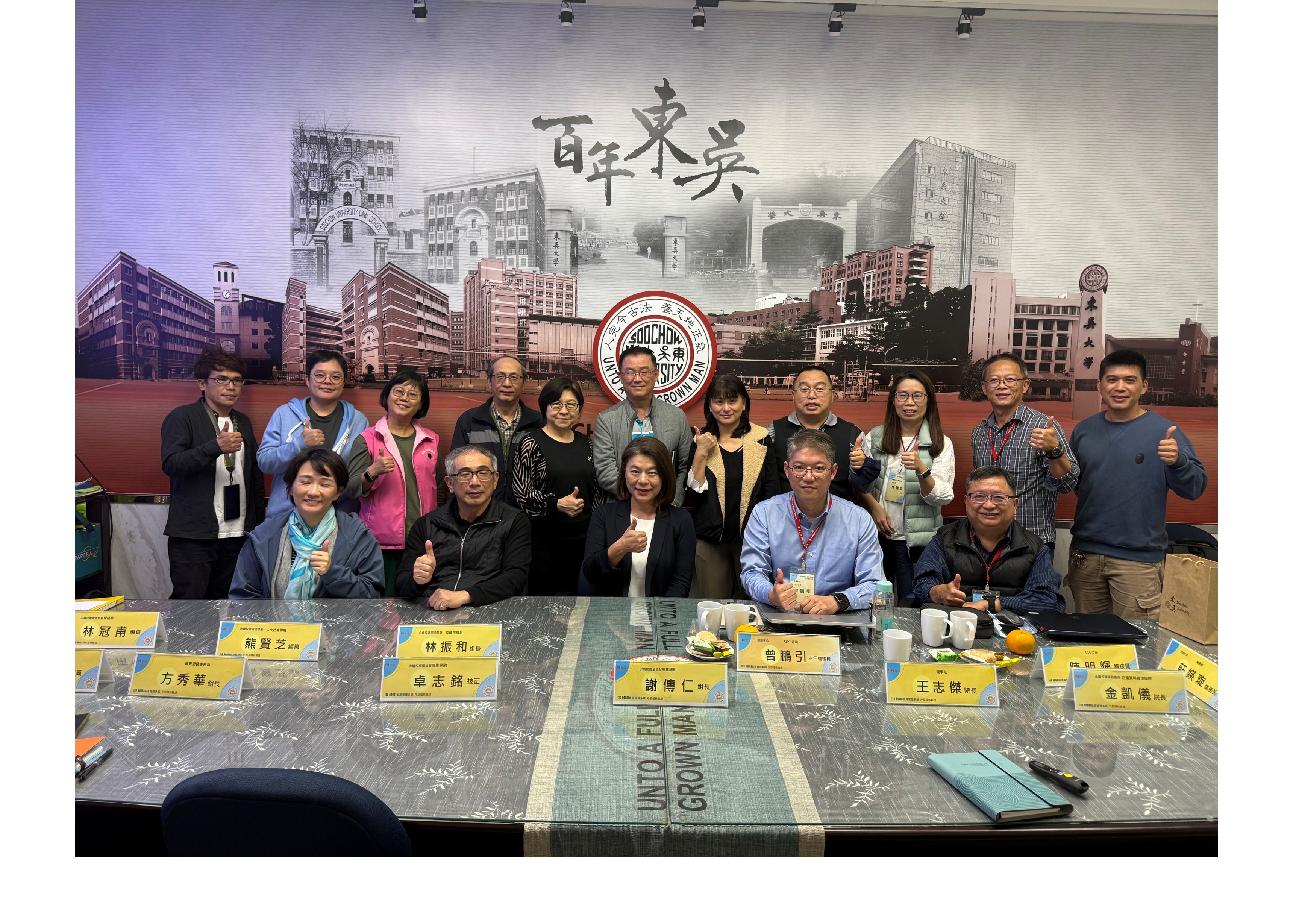
Soochow University passed its three-year recertification for ISO 14001 (Environmental Management) and ISO 45001 (Occupational Health and Safety), along with the annual surveillance audit for ISO 50001 (Energy Management) in December 2025, underscoring third-party recognition by SGS of the University’s management systems in campus safety, environmental protection and energy conservation, as it advances toward a greener campus and sustainable governance.
The SGS audit team gave high credit to SU for its strengths in energy data collection and cross-departmental coordination. From December 11 to 12, the university successfully completed the annual surveillance audit of its energy management system.
Since adopting the system in 2023, Soochow University has institutionalized energy management through clear policies, EnPIs, and action plans, supported by data analysis, internal audits, and management reviews.
The audit group noted that SU has established objectives that effectively support energy conservation, carbon reduction and sustainable campus governance.
Since 2017, SU has advanced its environmental and occupational health and safety management systems. An on-site audit by the SGS from December 8 to 10 found no major nonconformities, enabling certification renewal and securing a new three-year cycle following earlier certifications in 2019 and 2022.
SU said it will continue to follow the Plan-Do-Check-Act (PDCA) cycle to foster a safe and healthy campus environment, advance smart management practices, and adopt energy-saving technologies and intelligent monitoring systems to further reduce campus energy consumption, align with national net-zero policies, and progressively cut carbon emissions.
| category | title | date |
|---|---|---|
| Headline News | SU Welcomes International Degree Students with Comprehensive Orientation and Support | 09/09/2026 |
| Headline News | SU’s School of Liberal Arts and Social Sciences Partners with Yamaguchi University to Explore the Humanities in the AI Era | 08/18/2026 |
| Headline News | SU Partners with TAISE to Strengthen Sustainability Competitiveness through ESG Leadership Workshop | 07/13/2026 |
| Headline News | From Economics to Statistics and Biostatistics: Soochow University Awards Honorary Doctorate to Distinguished Alumna Eugenia Henry | 07/13/2026 |
| Headline News | SU, SinoPac Holdings Sign MOU to Cultivate and Retain International Talent | 06/03/2026 |