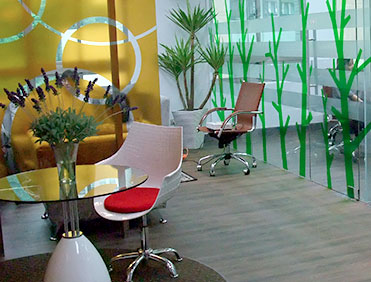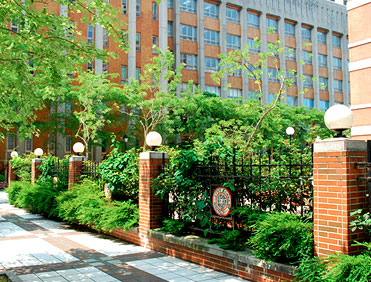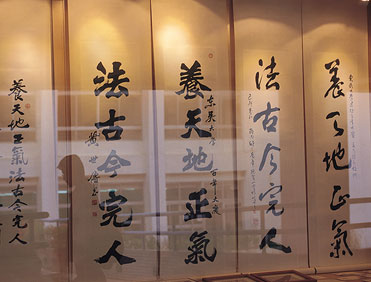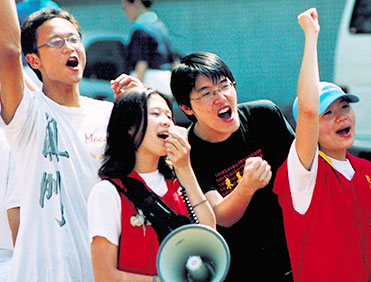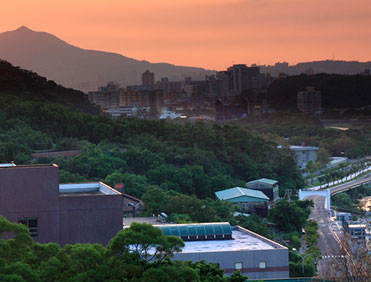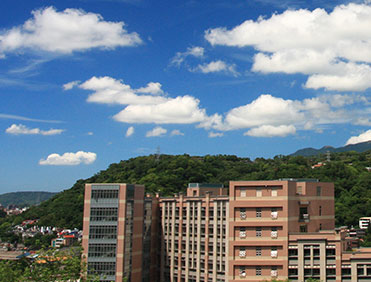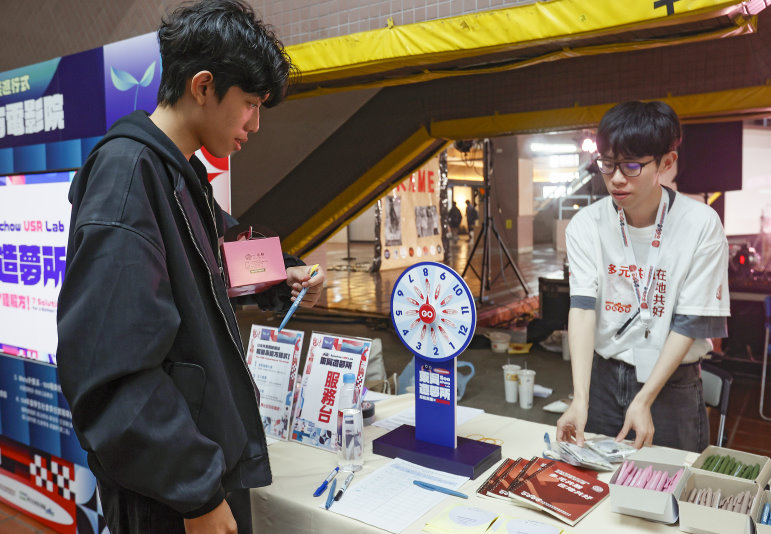

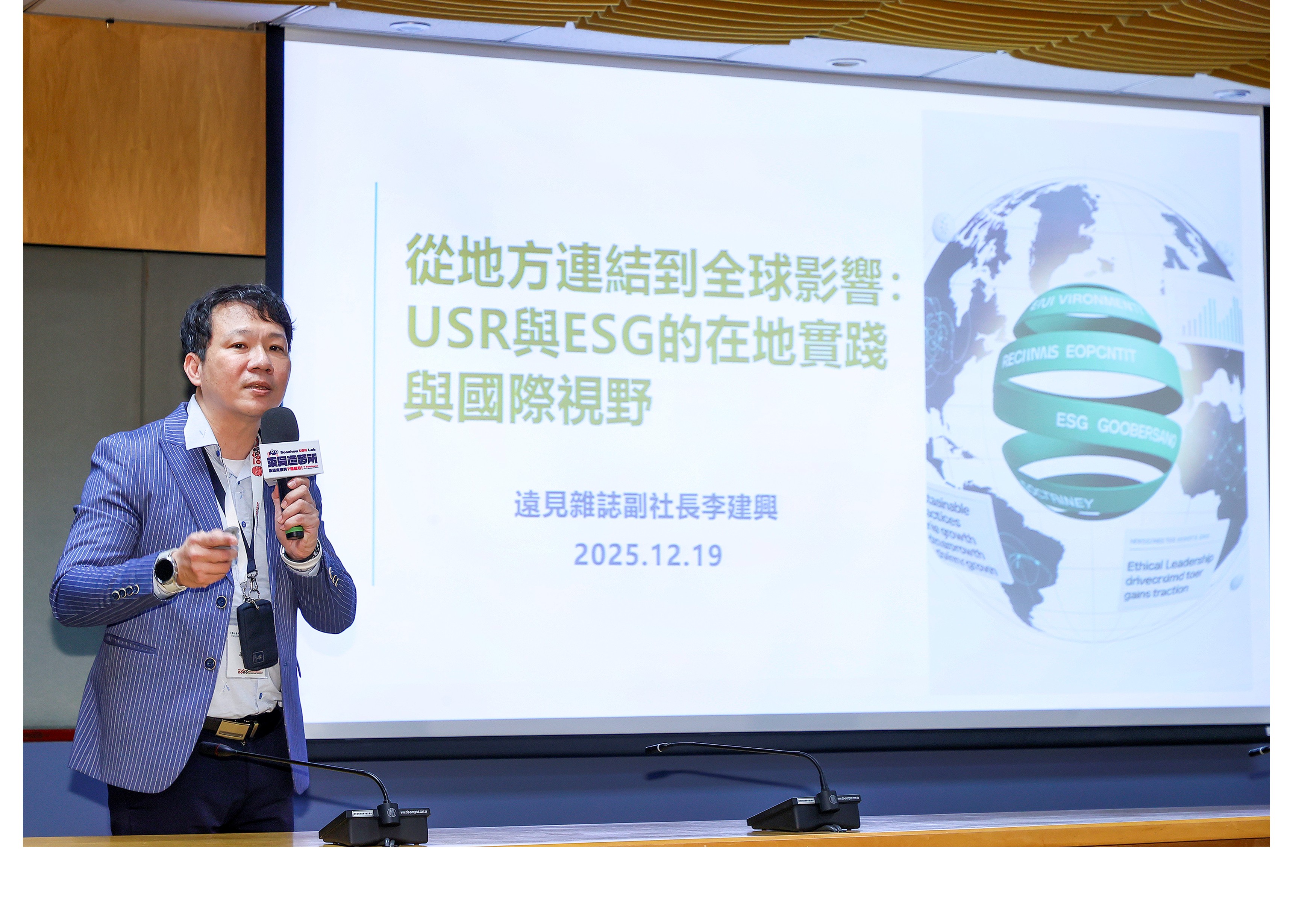
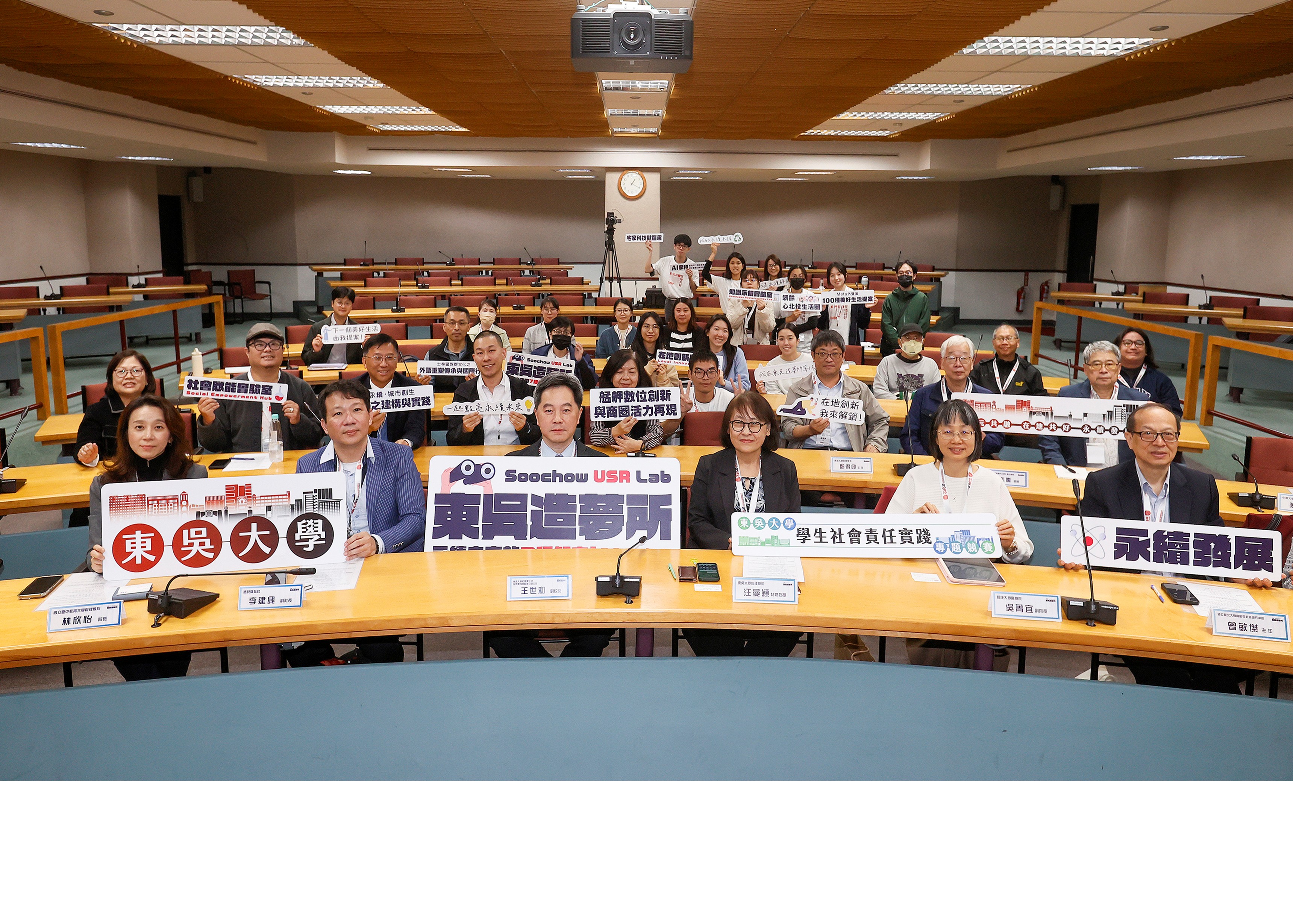
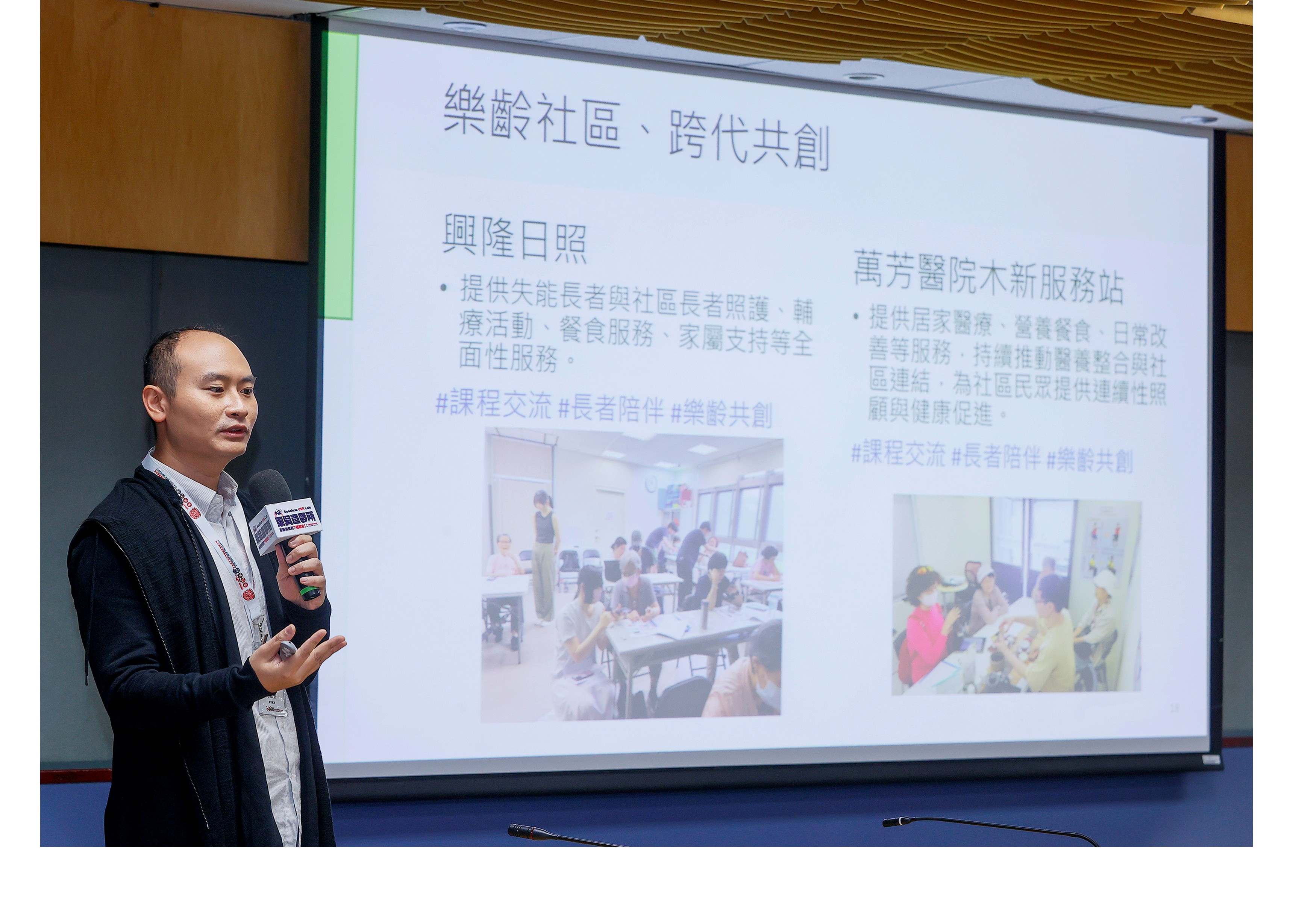
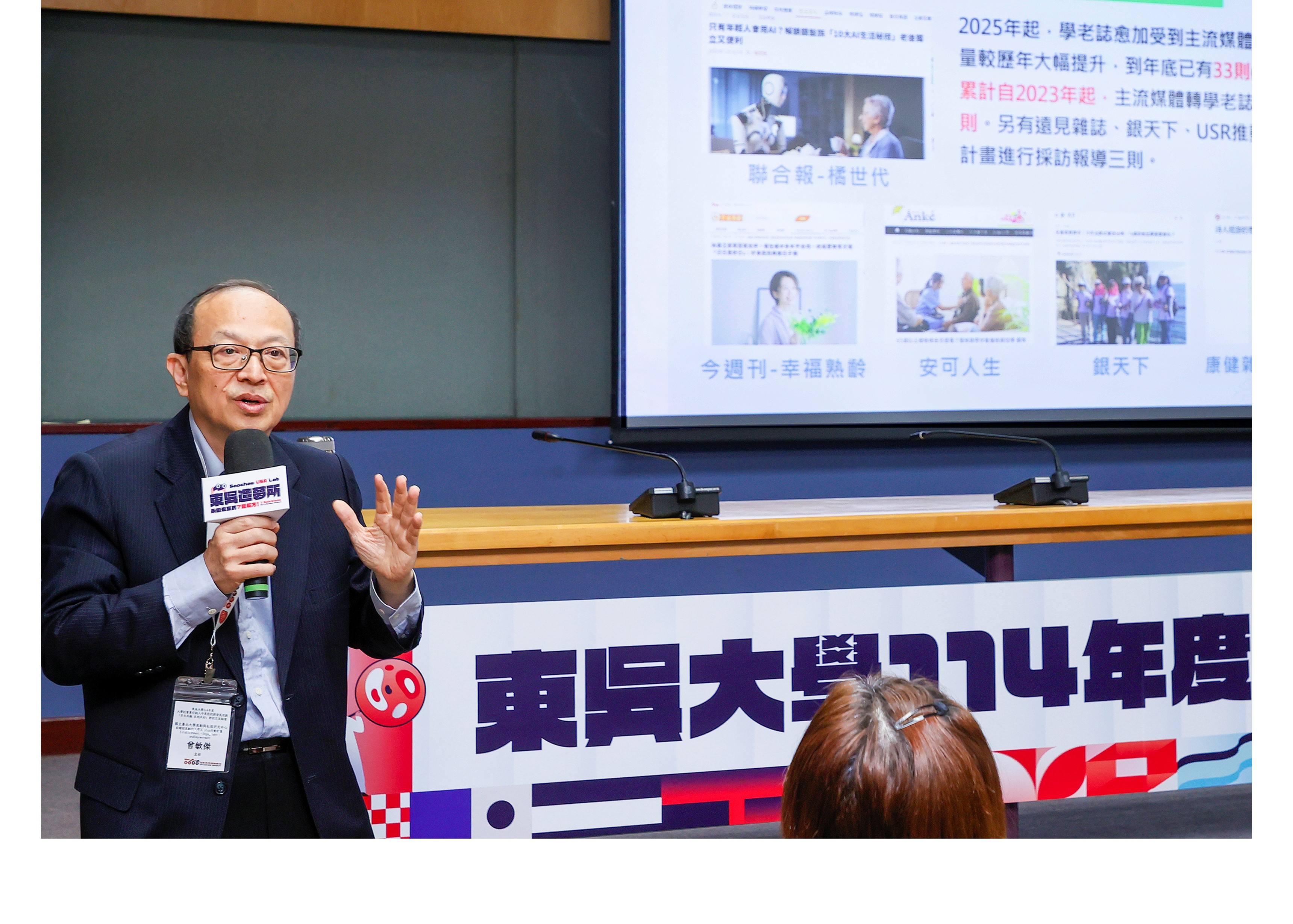
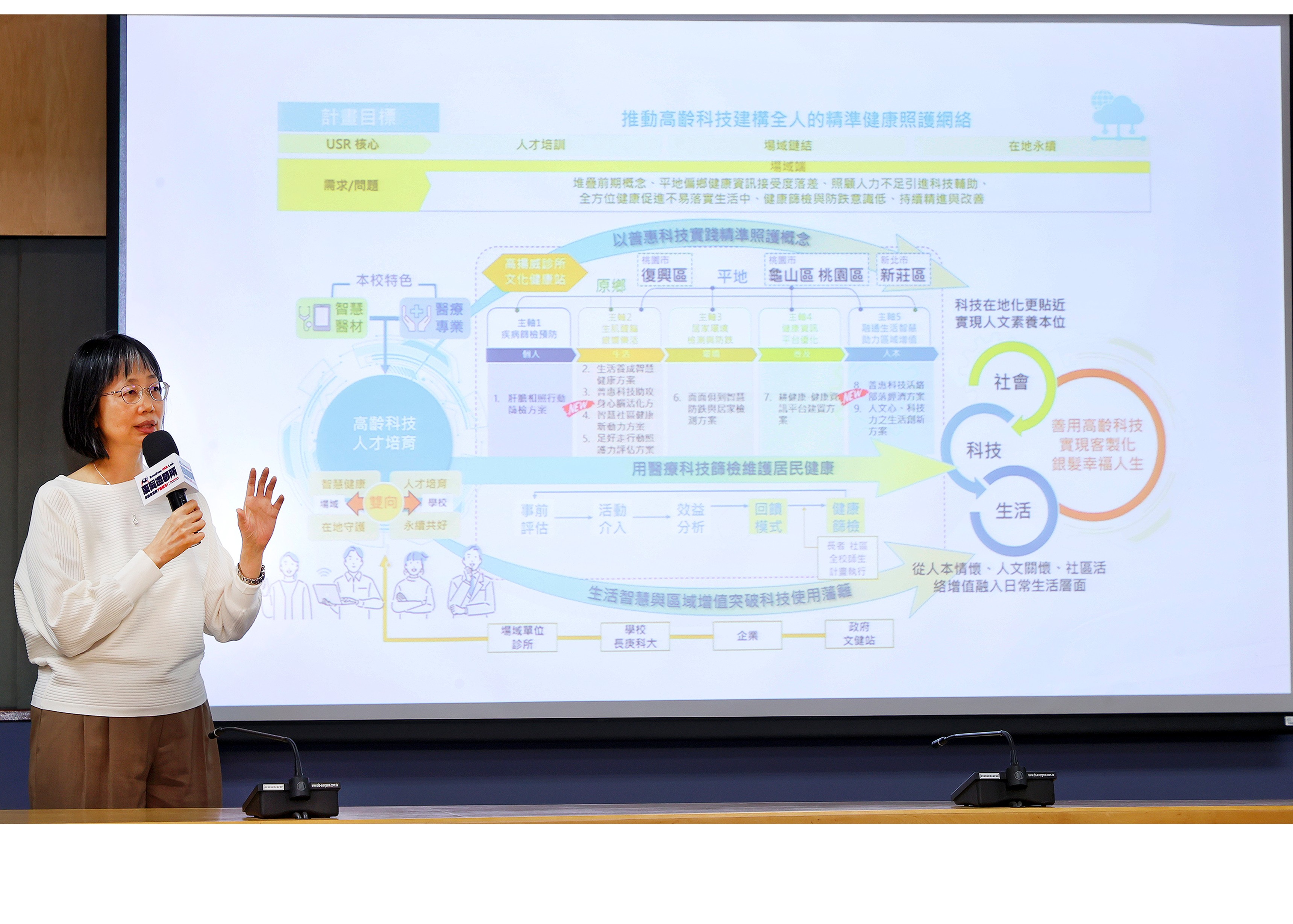
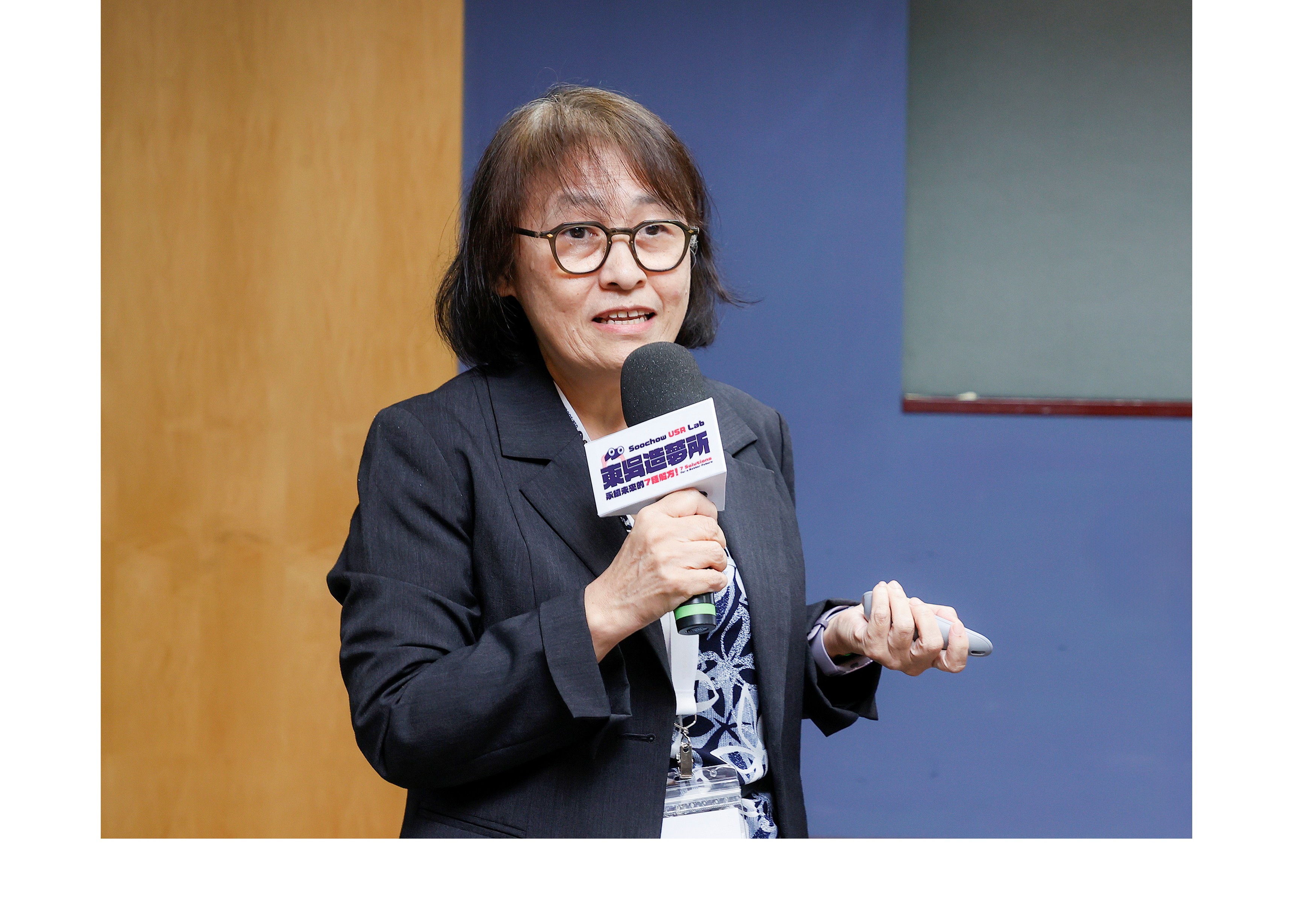
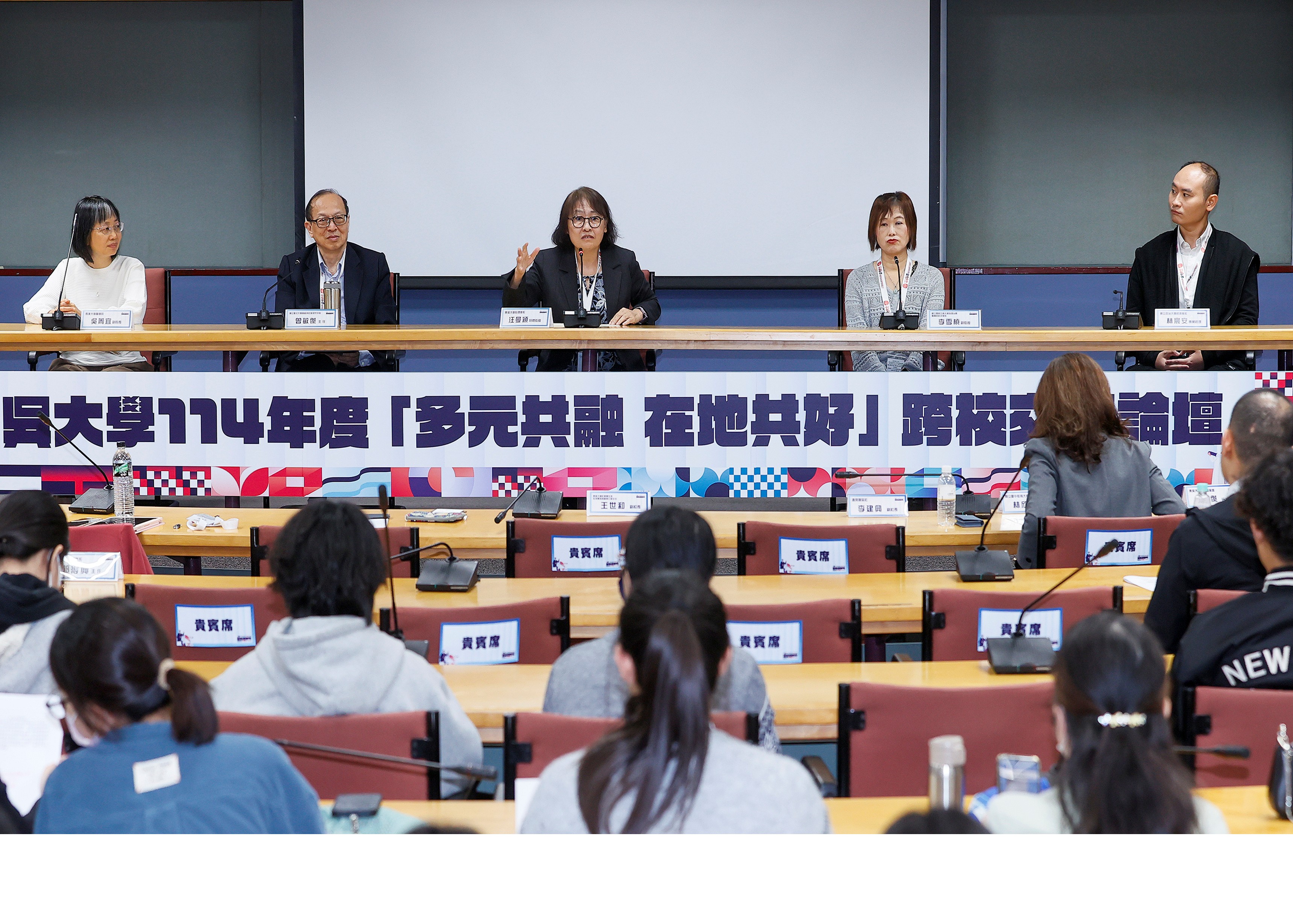
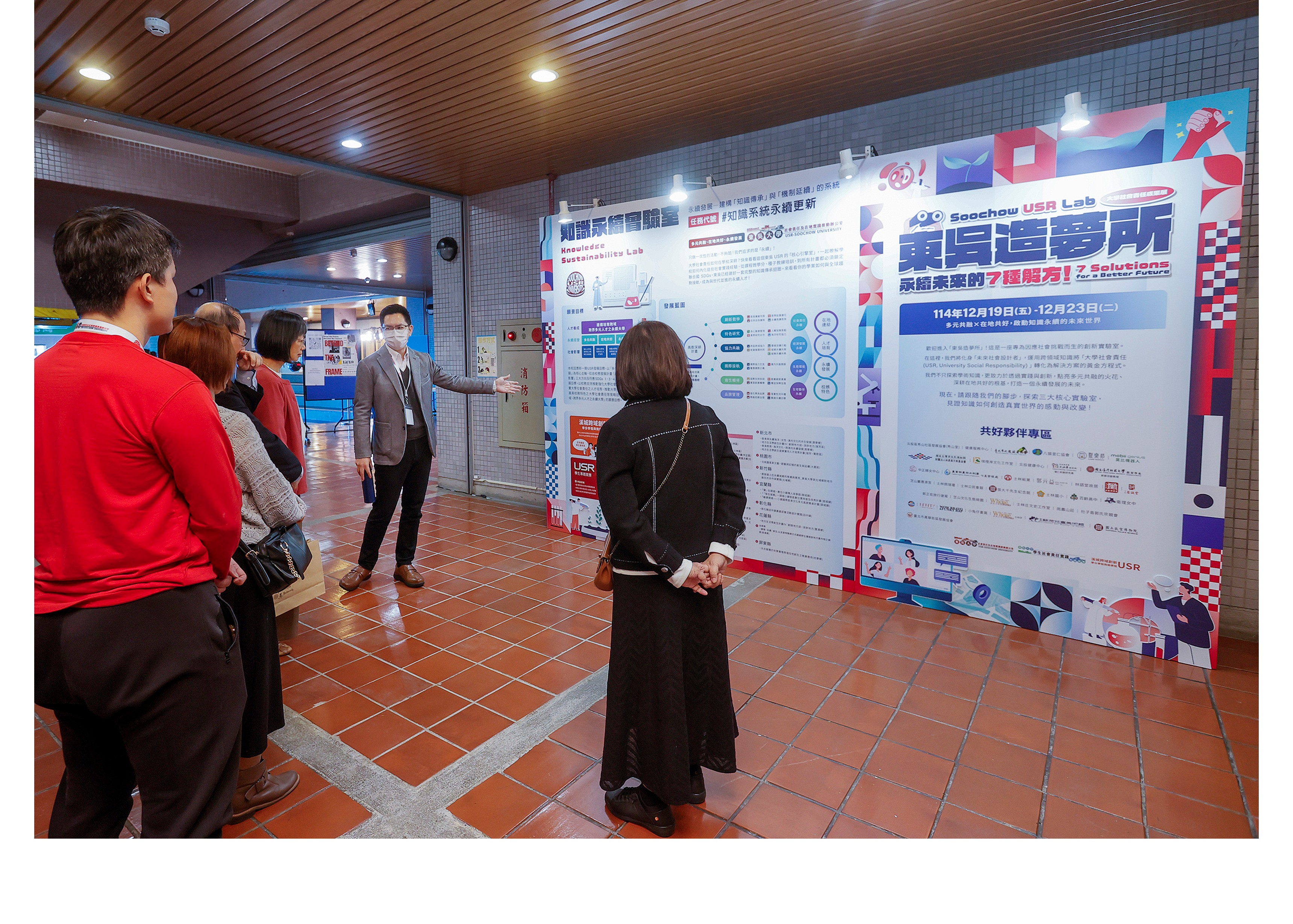
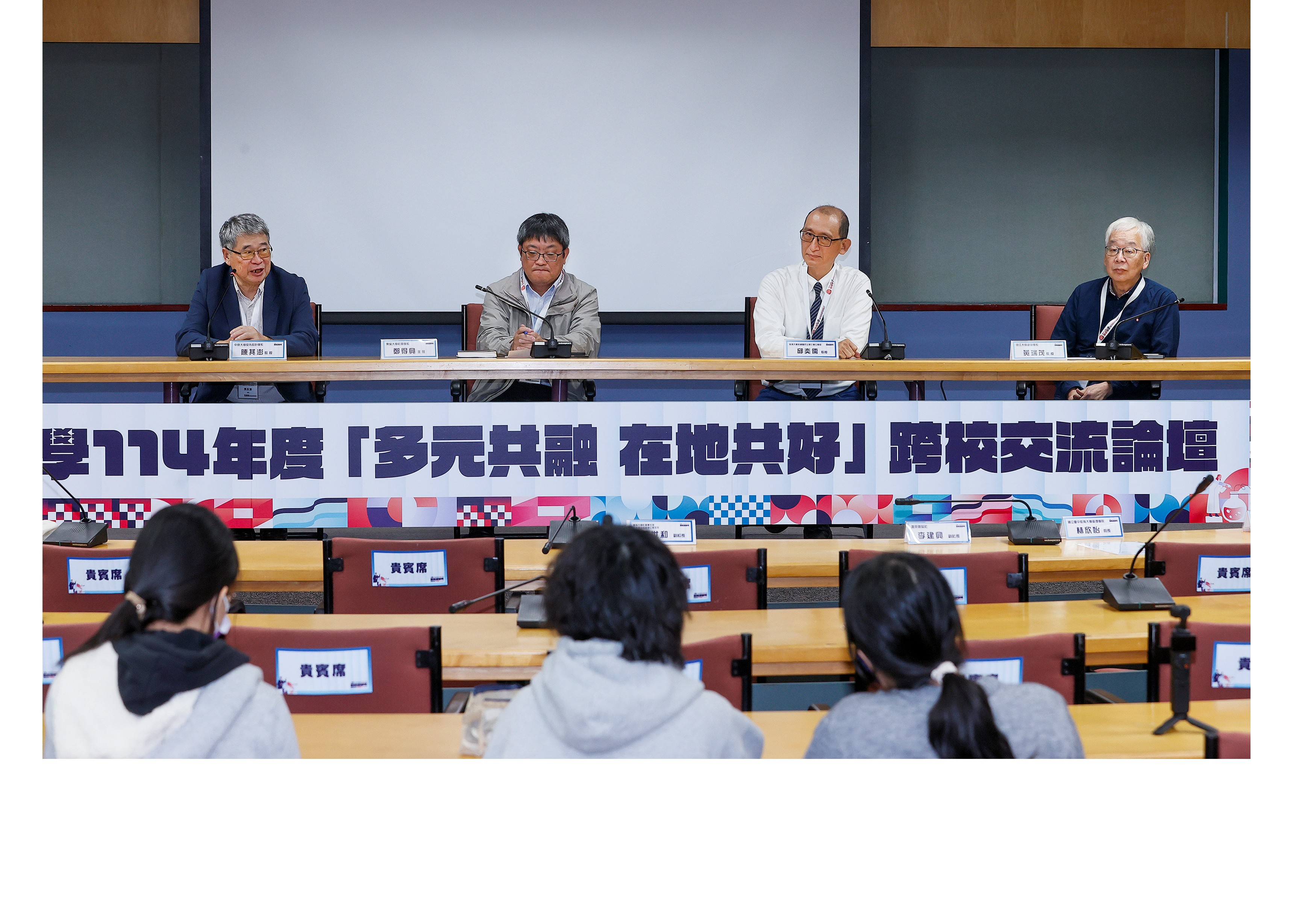
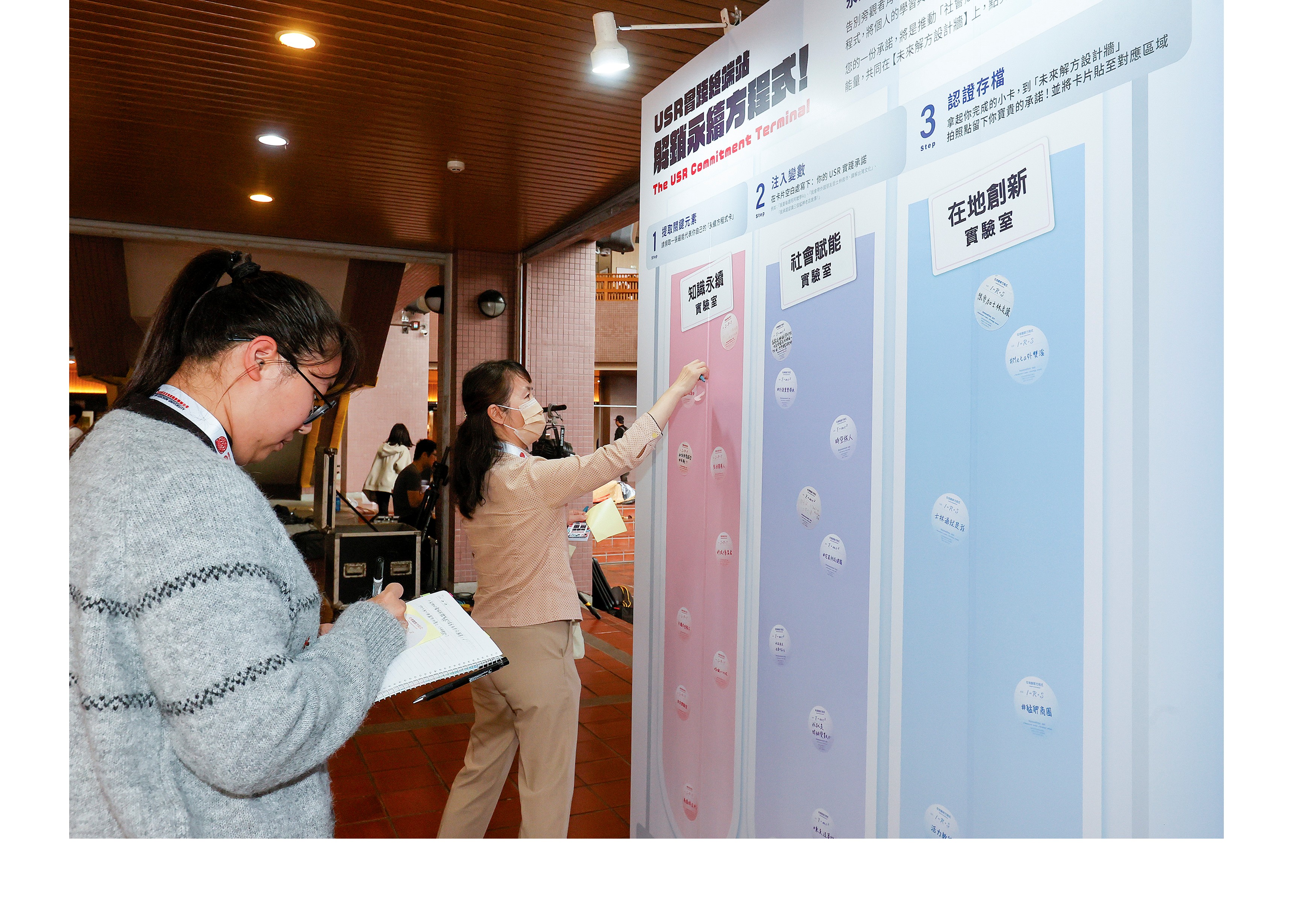
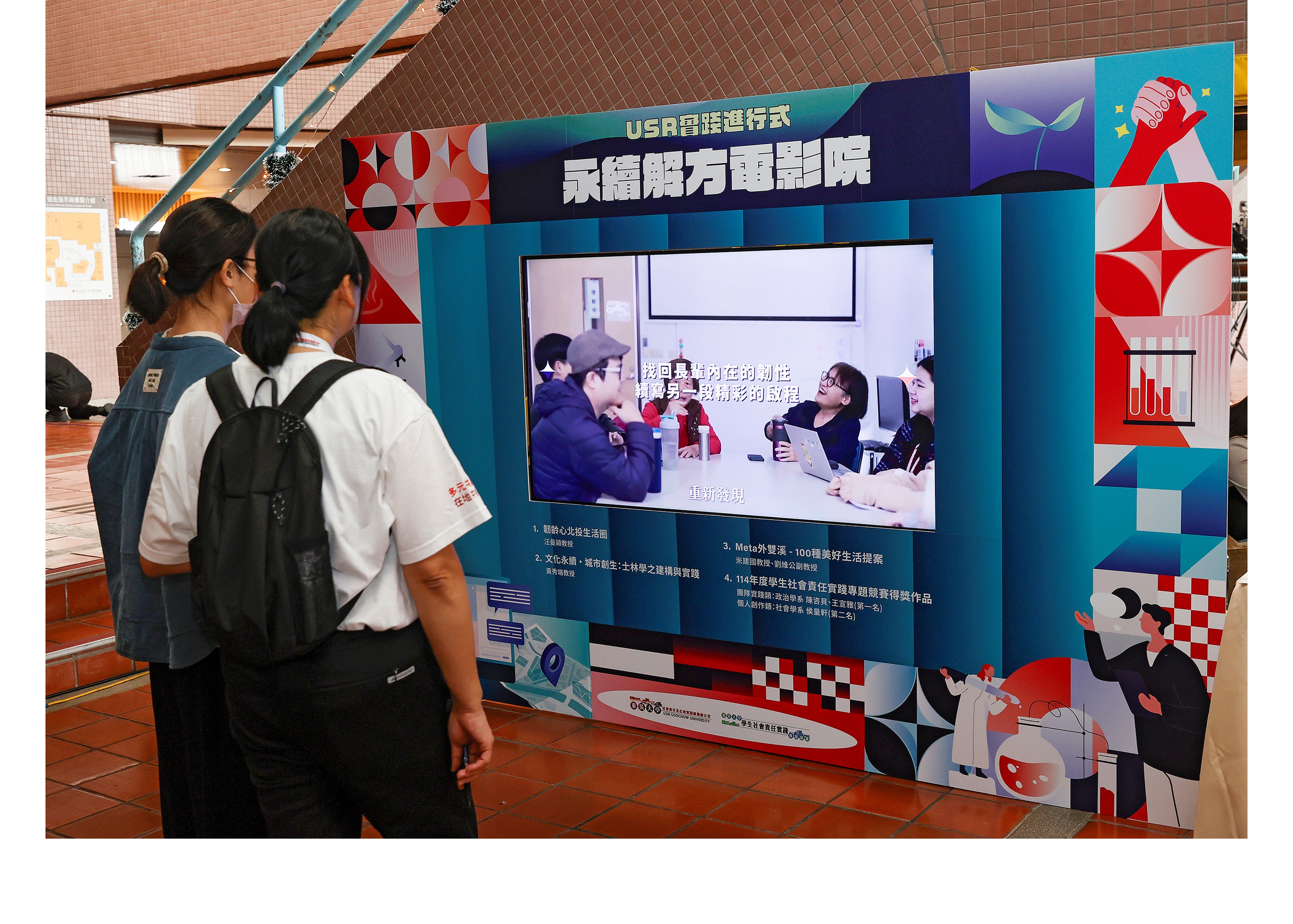
On December 19, scholars from Soochow and nine other universities, along with Global Views Monthly, gathered at SU’s Waishuangxi Campus in the “2025 Diversity and Inclusion, Local Co-Prosperity” Cross-Campus Forum for two USR major themes. From December 19 to 23, the University also presented the exhibition “Soochow Dream Lab: Seven Solutions for a Sustainable Future,” featuring three core zones and interactive areas encouraging faculty and student participation.
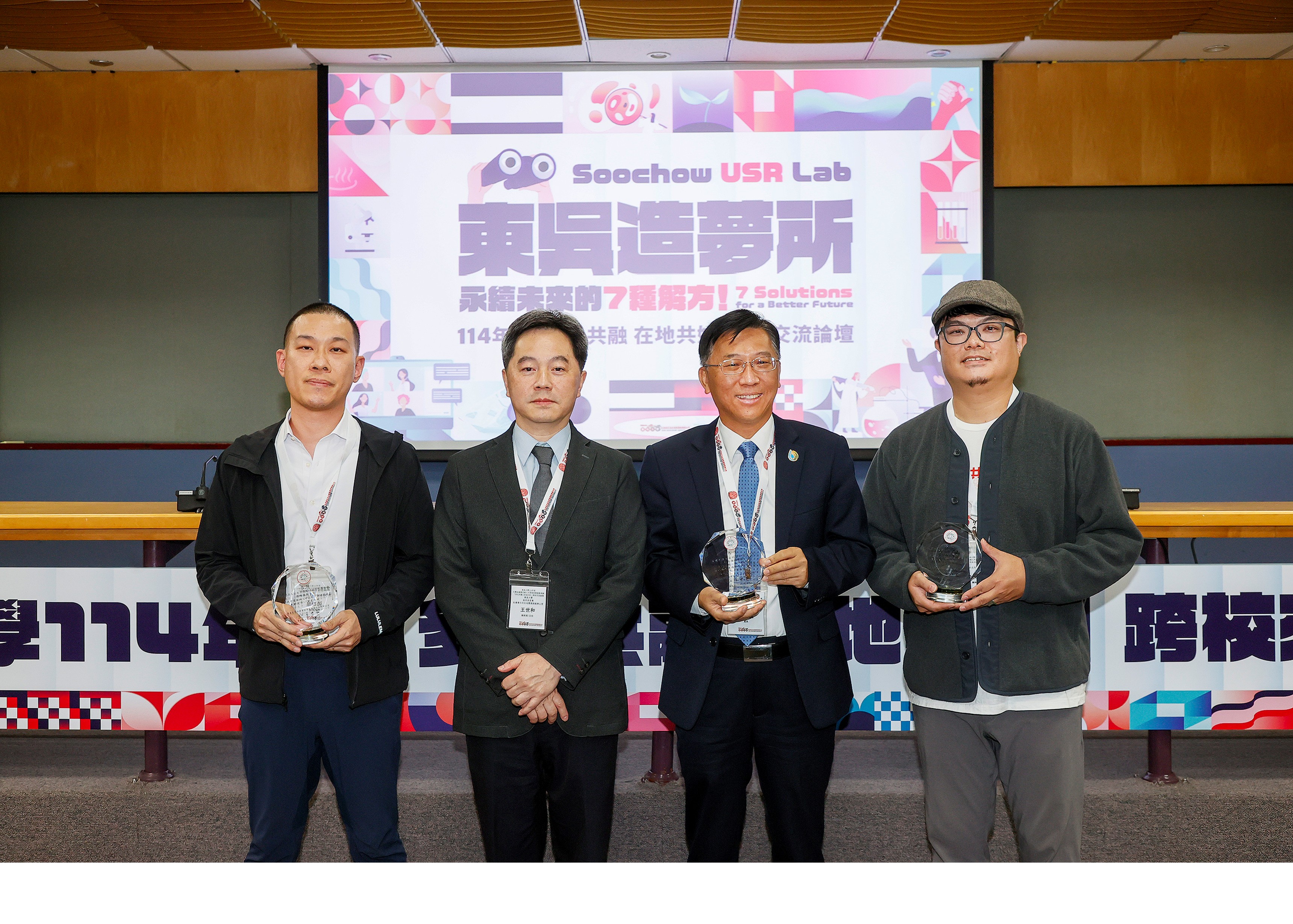
Shih-Ho Wang, Vice President of SU and Director of the Office for Social Responsibility and Local Engagement, opened the forum with a welcome address. To express gratitude to community partners who have long supported SU’s faculty and students, Wang awarded the “Local Co-Prosperity Appreciation Award” to the Taipei Patauw Lizen Association, the Chising Management Office of the Irrigation Agency, Ministry of Agriculture, and the Taipei Hsi Liu Environmental Greening Foundation.
As the distinguished guest speaker, Chien-Hsing Li, Vice President of Global Views Monthly, delivered a speech about USR and ESG in Local Practice and International Vision. He shared media observations on USR while emphasizing that effective USR initiatives must address real problems and propose unique solutions that reflect each university’s expertise.
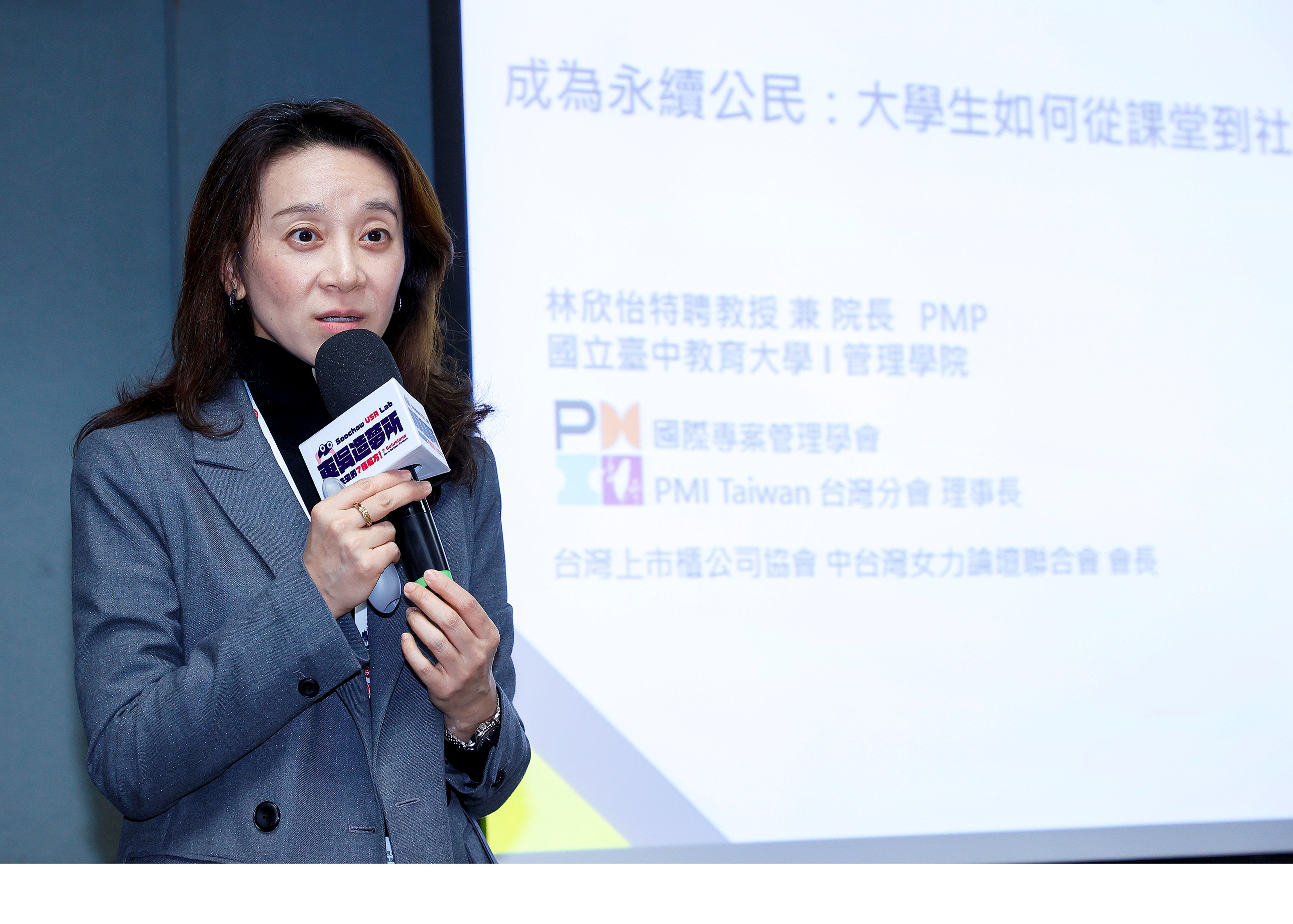
Prof. Shin-Yi Carol Lin, Dean of the College of Management at National Taichung University of Education, then gave a keynote speech entitled “Becoming Sustainable Citizens: How Can University Students Go from Classroom to Community Practice?” She highlighted that through the process of hands-on projects and team collaboration, students can cultivate communication, cooperation, and business thinking skills.
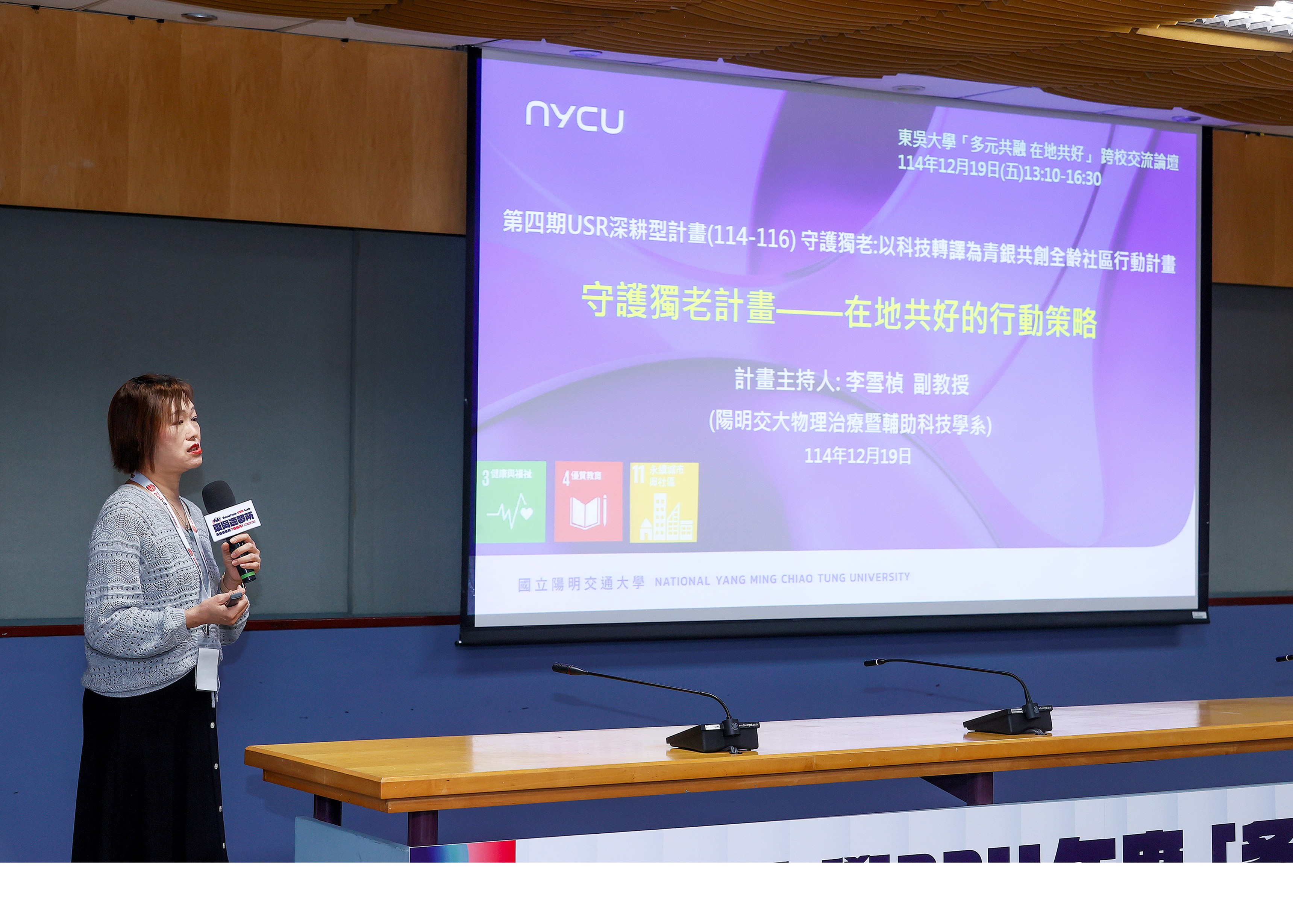
The forum was divided into two main themes. The first theme featured “Action Strategies for Local Co-Prosperity.” Chen-An Lin, Project Assistant from NCCU, shared the “Prospering Ankang - Benefiting Wenshan” project; Hsuei-Chen Lee, Associate Professor at NYCU, introduced “Safeguarding the Elderly: A Technology-Translated Intergenerational Co-Creation Initiative for All-Age Communities”; Min-Chieh Tseng, Director of NTPU, presented the “Forward-Looking 3E Initiative for Super-Aging Society: Establishment, Engagement, and Empowerment.”
Also, Ching-Yi Wu, Associate Dean of College of Medicine at CGU, reported on the “Chang Gung Long-Term Cultivation: Building a Community Era of Healthy Aging and Technology,” while Man-Ying Wang, Distinguished Professor in the Department of Psychology at SU, noted the outcomes of the “Beitou Resilient Aging Living Community” project.
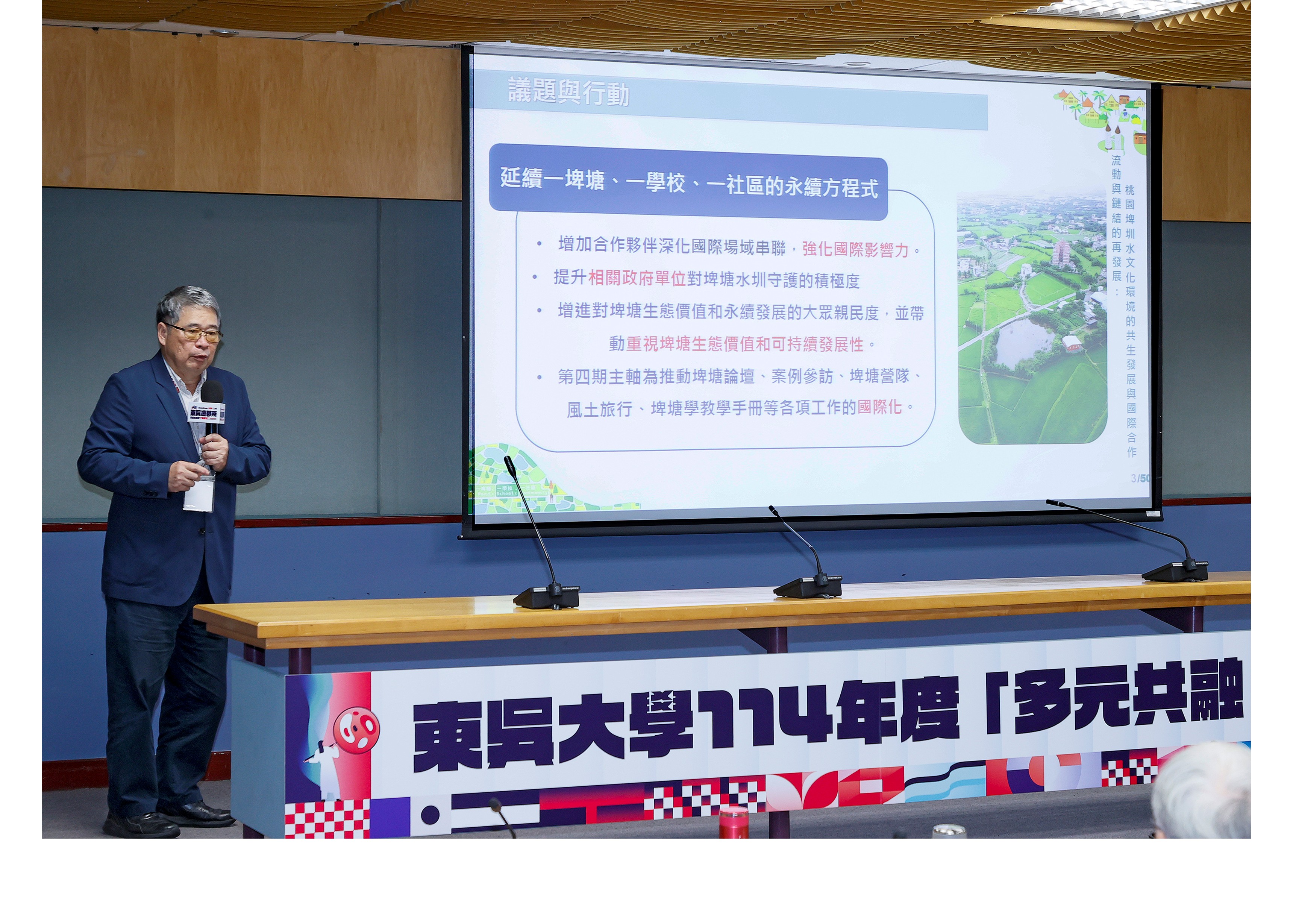
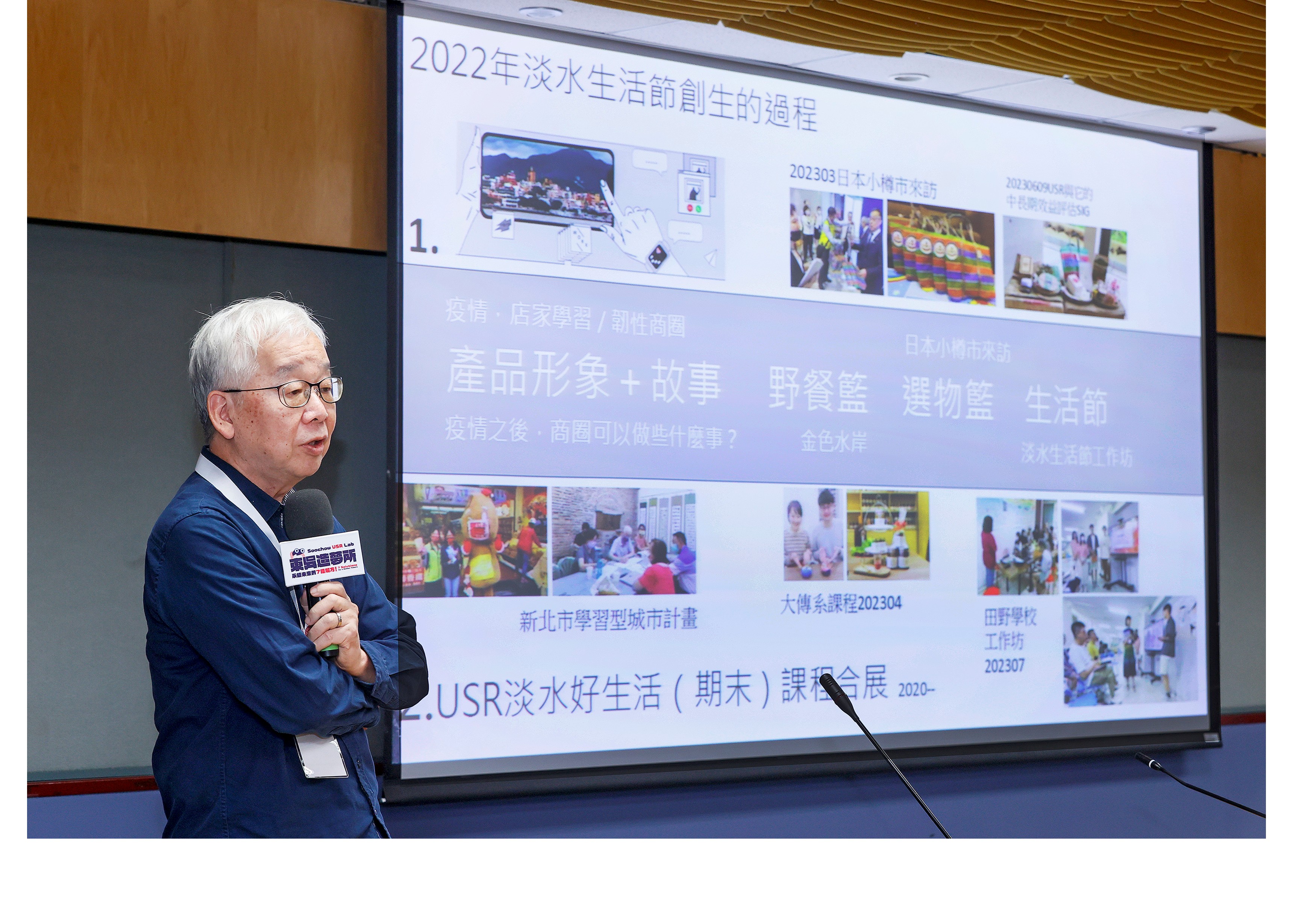
The second theme is “Methods of Diversity and Inclusion in Practice.” Speakers of this topic included Professor Chie-Peng Chen of Chung Yuan Christian University, presenting his experience on the project “The Flow and Linkage between Taoyuan Canal culture and International Diverse Links”; Professor Jui-Mao Huang of Tamkang University introduced “Tamsui Good Life: Empowerment, Innovation, Design and Actions between University and Town.”
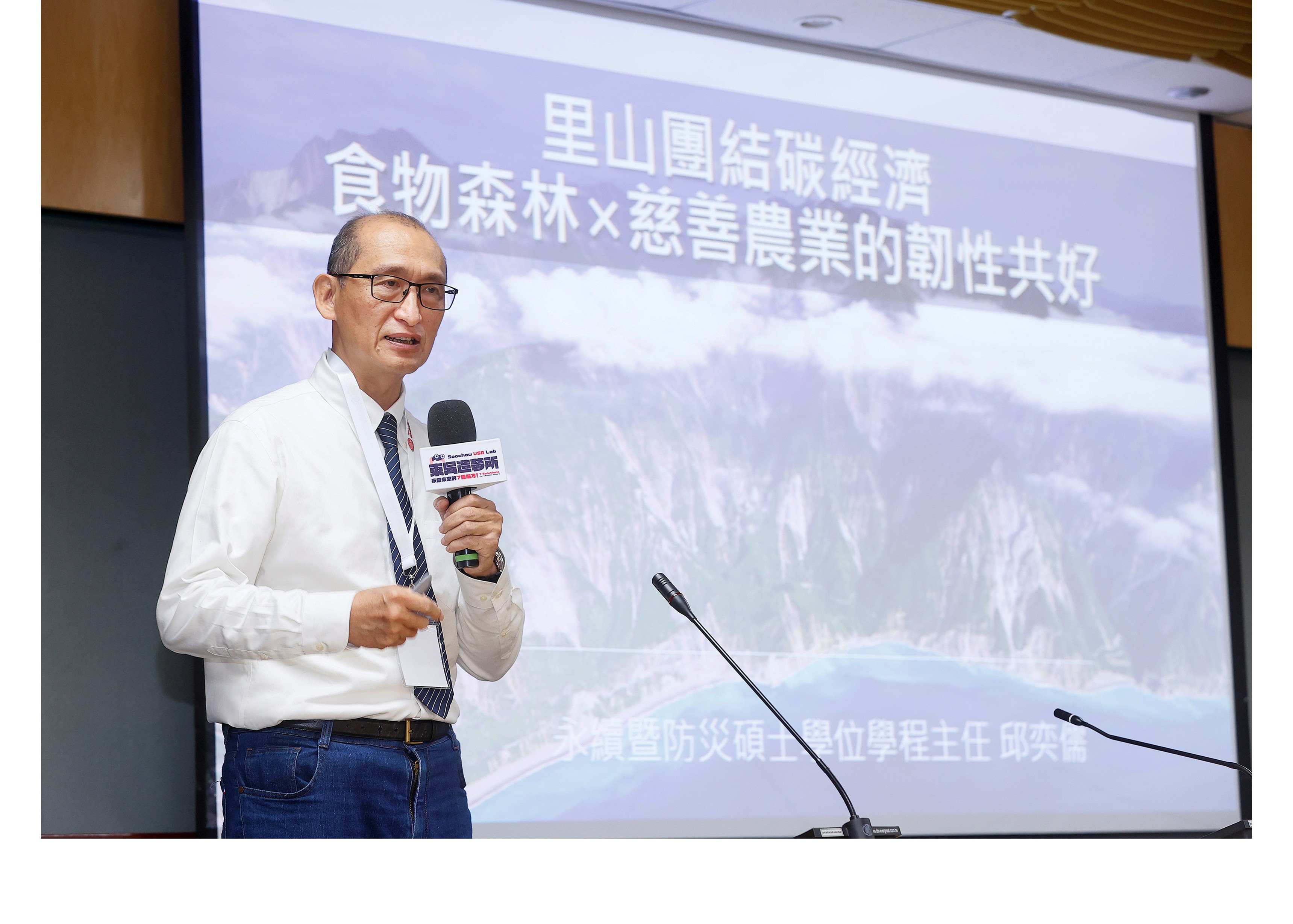
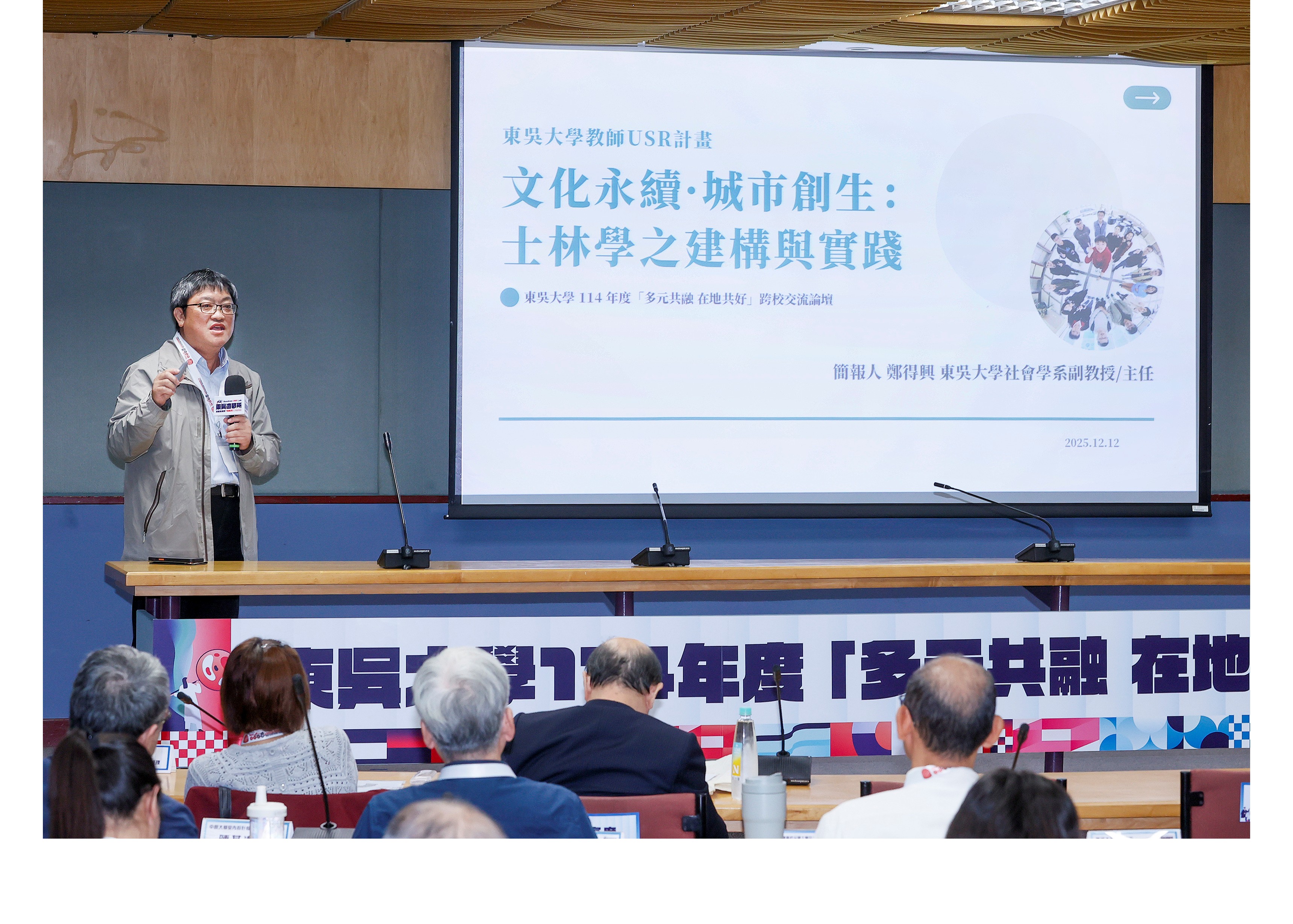
Professor Yie-Ru Chiu of Tzu Chi University shared “Satoyama Solidarity Carbon Economy—A Collaborative Learning Project from Sustainable Consumption to Resilient Community Building.” Lastly, Ter-Hsing Cheng, Chair of the Department of Sociology at SU, mentioned the “Cultural Sustainability and Urban Revitalization: the Conception of Shilinology.”
Kai-Chieh Hu, Dean of SU’ Office of Research Development, invited the guests to visit the three exhibition zones—Social Empowerment Lab, Local Innovation Lab, and Knowledge Sustainability Lab—and explained their significance and USR projects. Hu emphasized that SU boosts USR with the core principles: “Diversity and Inclusion, Local Co-Prosperity, and Sustainable Development,” expecting students, under social impact, to achieve the goals of talent cultivation and sustainable management.
| category | title | date |
|---|---|---|
| Headline News | SU Welcomes International Degree Students with Comprehensive Orientation and Support | 09/09/2026 |
| Headline News | SU’s School of Liberal Arts and Social Sciences Partners with Yamaguchi University to Explore the Humanities in the AI Era | 08/18/2026 |
| Headline News | SU Partners with TAISE to Strengthen Sustainability Competitiveness through ESG Leadership Workshop | 07/13/2026 |
| Headline News | From Economics to Statistics and Biostatistics: Soochow University Awards Honorary Doctorate to Distinguished Alumna Eugenia Henry | 07/13/2026 |
| Headline News | SU, SinoPac Holdings Sign MOU to Cultivate and Retain International Talent | 06/03/2026 |