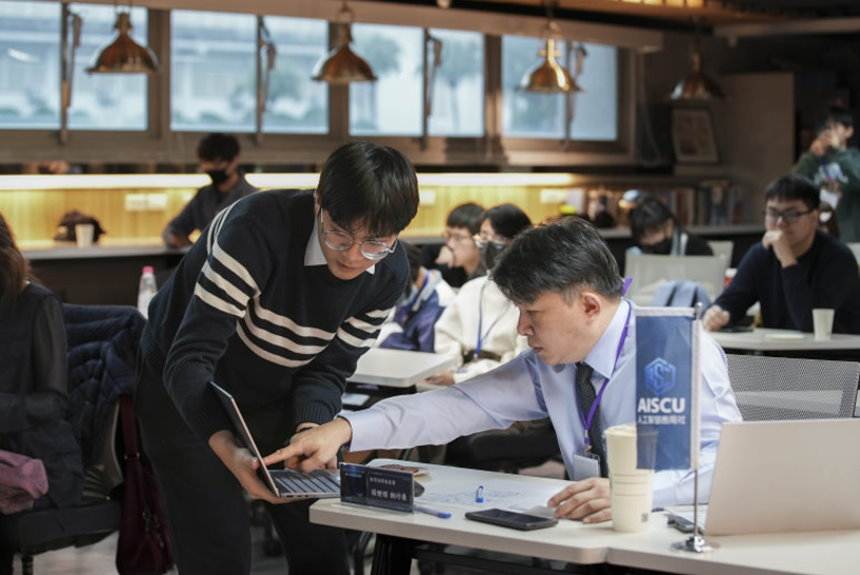
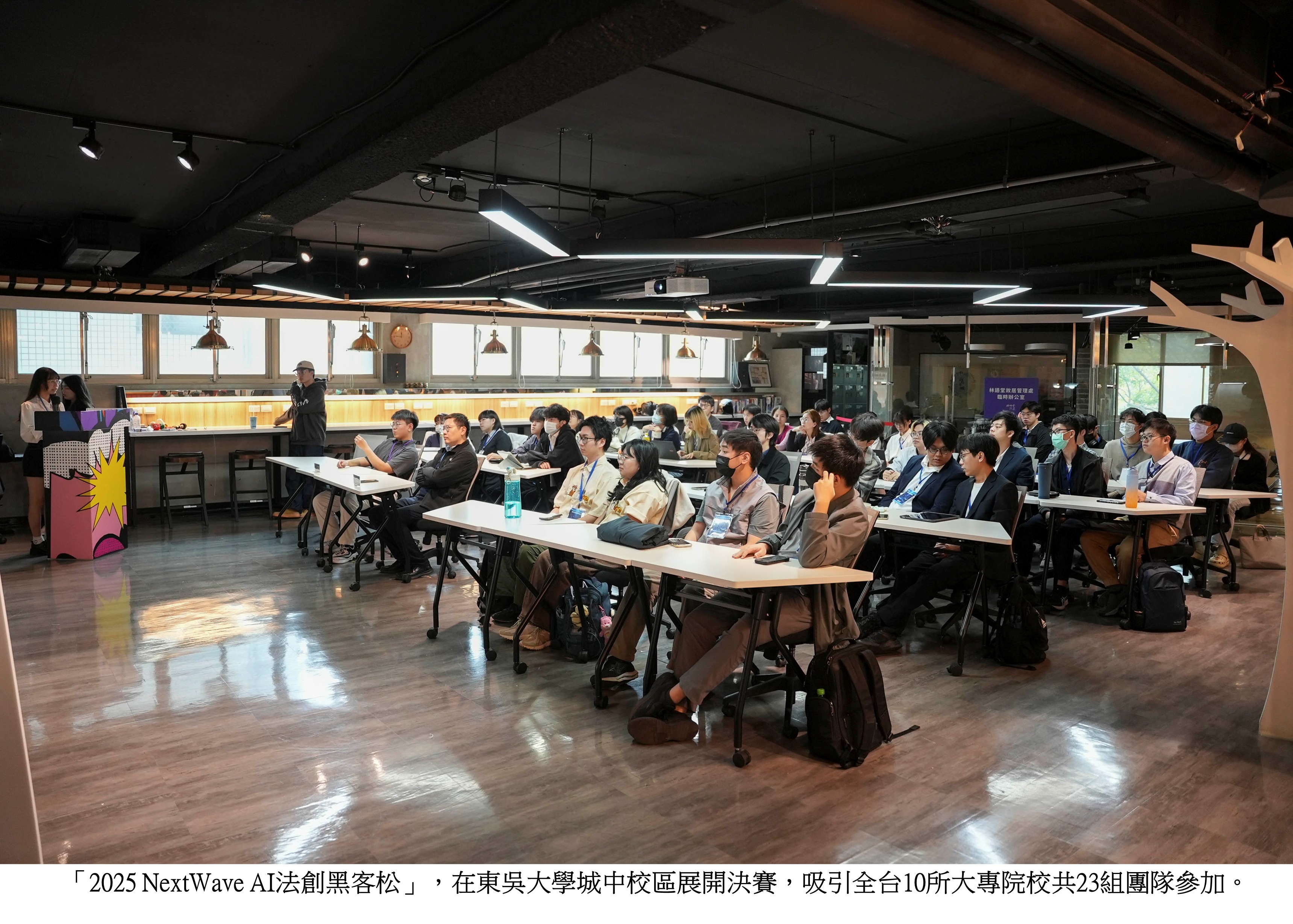
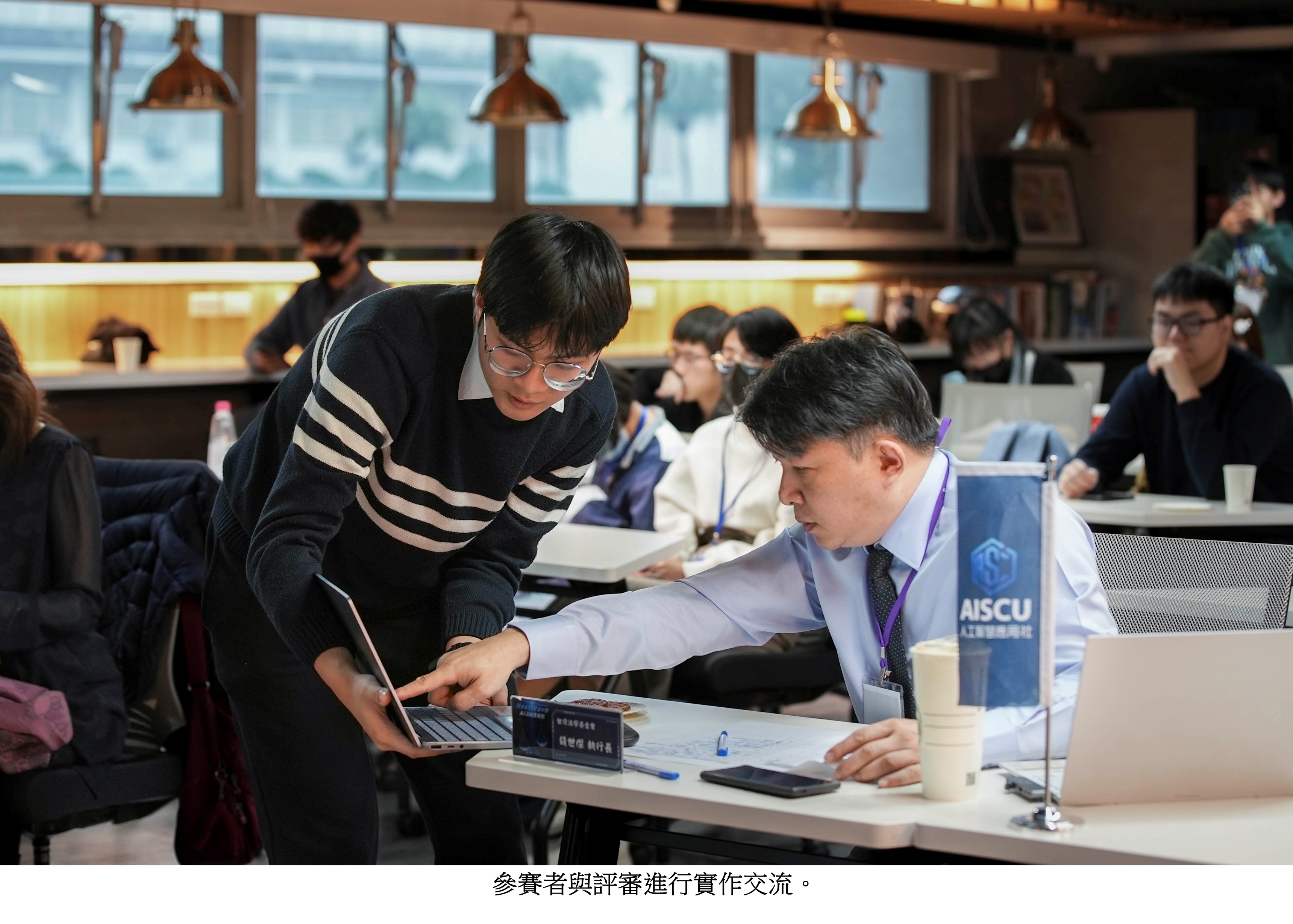
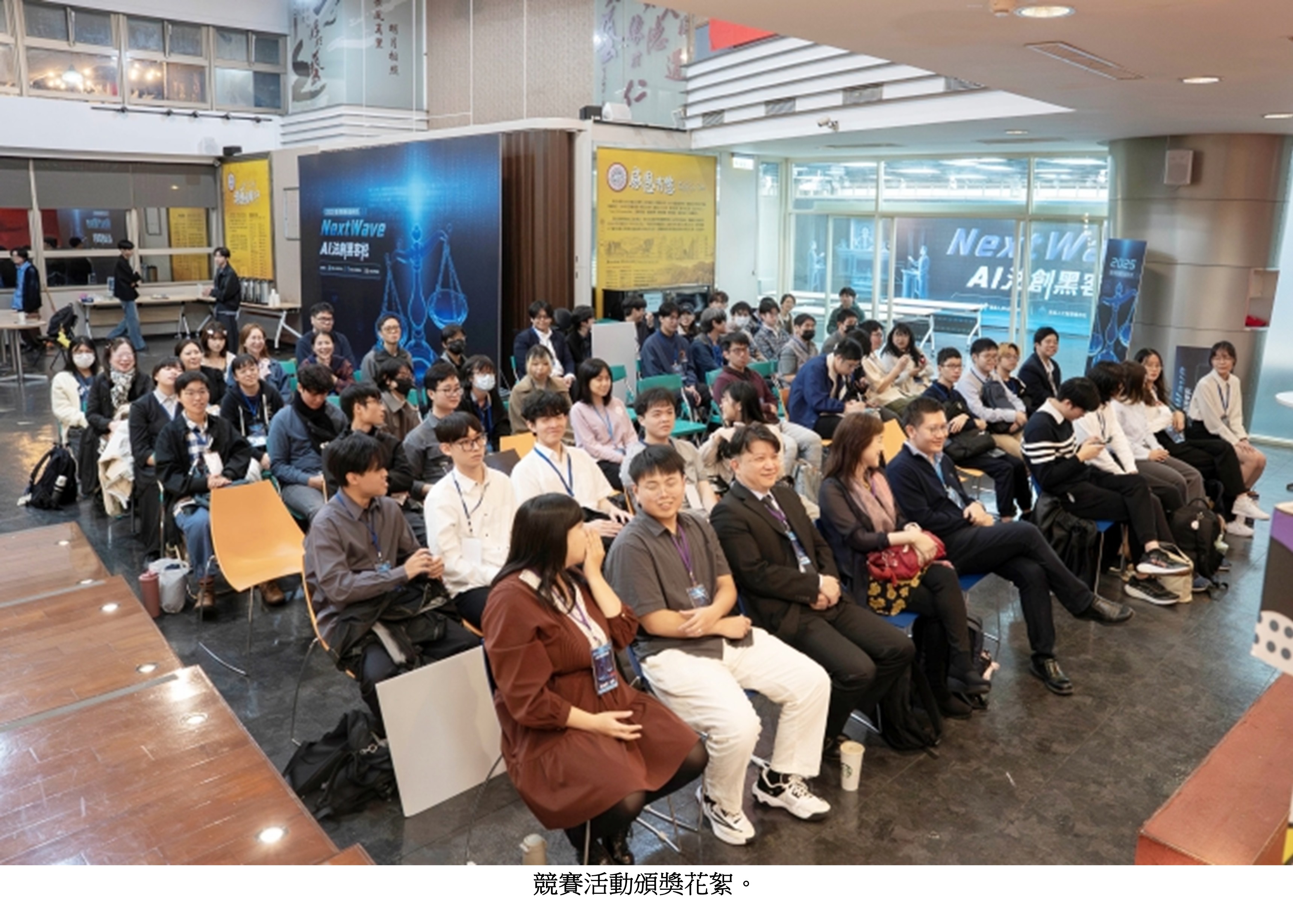
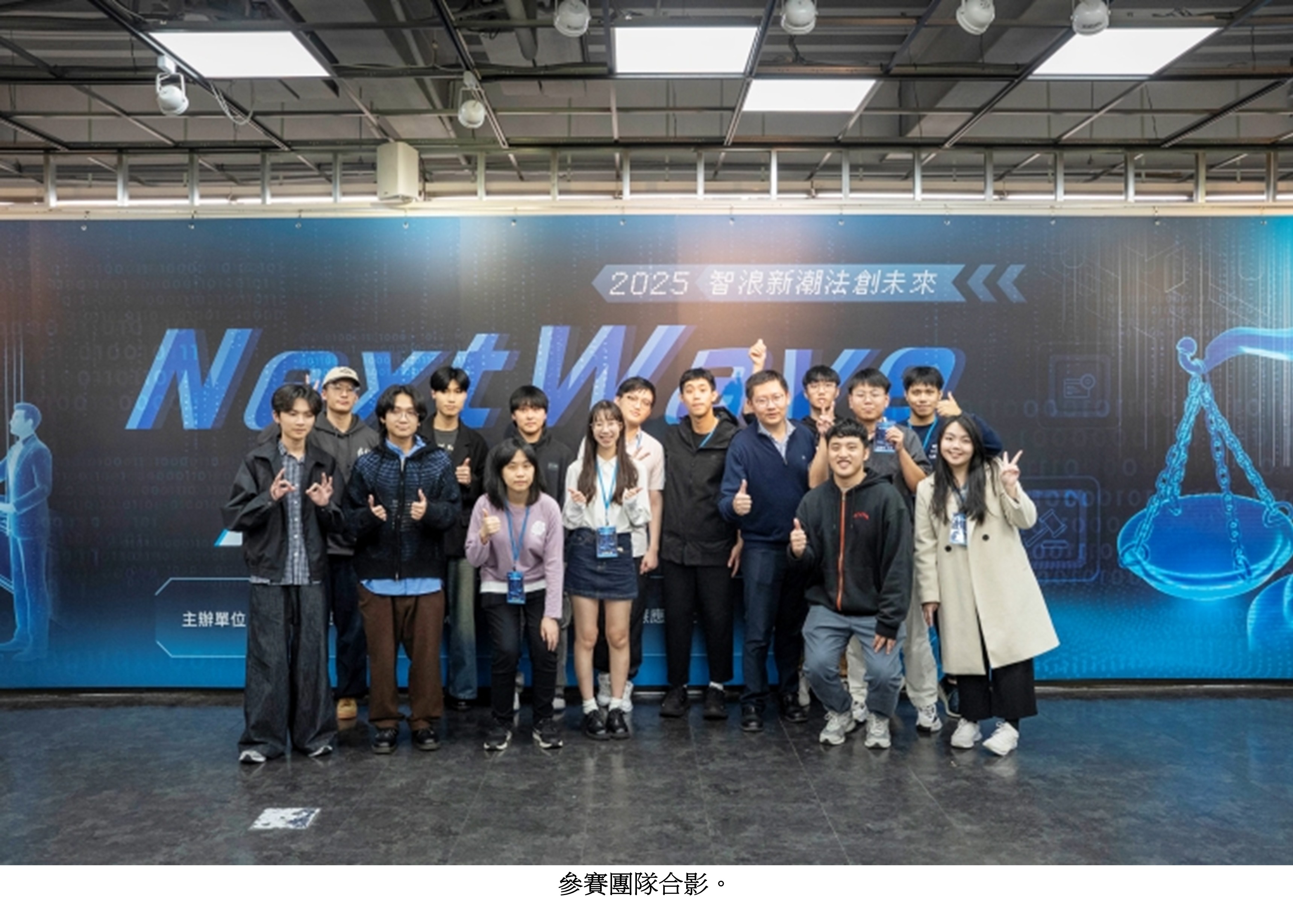
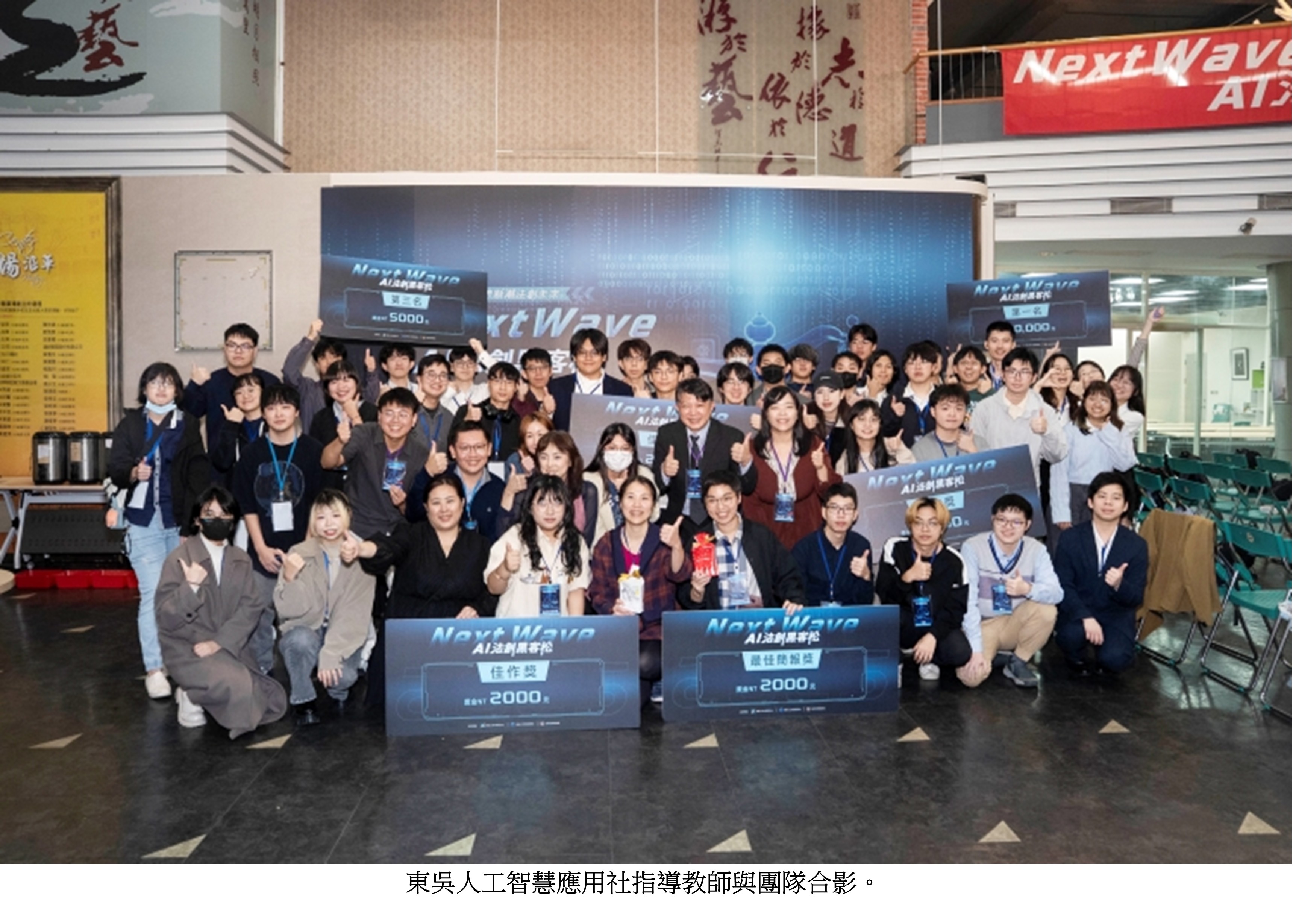
The 2025 NextWave AI Legal Innovation Hackathon, jointly organized by Soochow University’s Human-Centered AI Research Center, the AI Application Club, and the Taiwan Law Foundation, concluded with its final round and award ceremony at the university’s Downtown Campus. A total of 23 teams from 10 universities nationwide participated, with 15 teams advancing to the final competition to showcase innovative legal technology solutions.
The hackathon emphasized the concept of “human-centered AI,” encouraging participants to explore how AI can be integrated into legal consultation and automated contract retrieval systems. Through tackling real-world challenges, students not only enhanced their legal knowledge but also developed practical skills in process optimization and AI application.
A major highlight of the event was the use of low-code platforms such as AWS PartyRock for rapid prototyping. This approach challenged the conventional belief that programming is limited to engineers, enabling students from diverse fields—including law, design, and healthcare management—to transform identified pain points in legal services into functional AI solutions within a short period of time. This effort directly supports the goal of improving legal accessibility.
The participating teams demonstrated strong interdisciplinary collaboration. Team members came from a wide range of academic backgrounds, including law, information technology, healthcare management, land resources, software engineering, smart manufacturing, and defense science. By applying AI technologies, they translated abstract legal concepts into intuitive application prototypes and developed user-centered innovative service models.
Shih-Chieh Chien, Chief Executive Officer of the Taiwan Law Foundation, noted that the essence of legal technology lies in empowerment. Students’ ability to apply AI tools to solve practical problems reflects Taiwan’s progress toward digital transformation and interdisciplinary integration in legal education.
Professor Carol H. C. Chu, Director of the Human-Centered AI Research Center at Soochow University, highlighted that many teams proposed diverse solutions aimed at enhancing legal accessibility and service efficiency. These included AI legal consultation assistants, automated contract retrieval systems, and domain-specific legal workflow optimization tools, demonstrating the value of interdisciplinary collaboration.
Tse-Chuan Hsu, Associate Professor and faculty advisor to the AI Application Club, emphasized that information technology should be integrated with service design to better serve various industries. The ability of legal professionals to understand AI logic, and of technologists to grasp legal frameworks, will be a key competitive advantage in the AI era.
Li-Lun Chan, President of the AI Application Club, added that the hackathon provided an ideal platform for creativity and collaborative learning. Over the three-month program, participants progressed from idea development and technical implementation to workshops and final presentations. Through this process, they not only strengthened their AI competencies but also developed resilience in addressing complex problems.
The successful completion of the hackathon marks a significant milestone in the integration of legal education and AI application in Taiwan, showcasing both student innovation and the future potential of legal technology.
| category | title | date |
|---|---|---|
| Headline News | Soochow University International Students Explore Yilan: Culture & Fun | 10/21/2026 |
| Headline News | A Sweet Mid-Autumn at Soochow! 2026 International Students Enjoy Mooncakes Together | 10/01/2026 |
| Headline News | The World Meets at Soochow: Welcoming Fall 2026 Exchange Students | 09/29/2026 |
| Headline News | SU Welcomes International Degree Students with Comprehensive Orientation and Support | 09/09/2026 |
| Headline News | Soochow University Data Science Partners with San José State University as First Students Head to Silicon Valley | 09/03/2026 |